

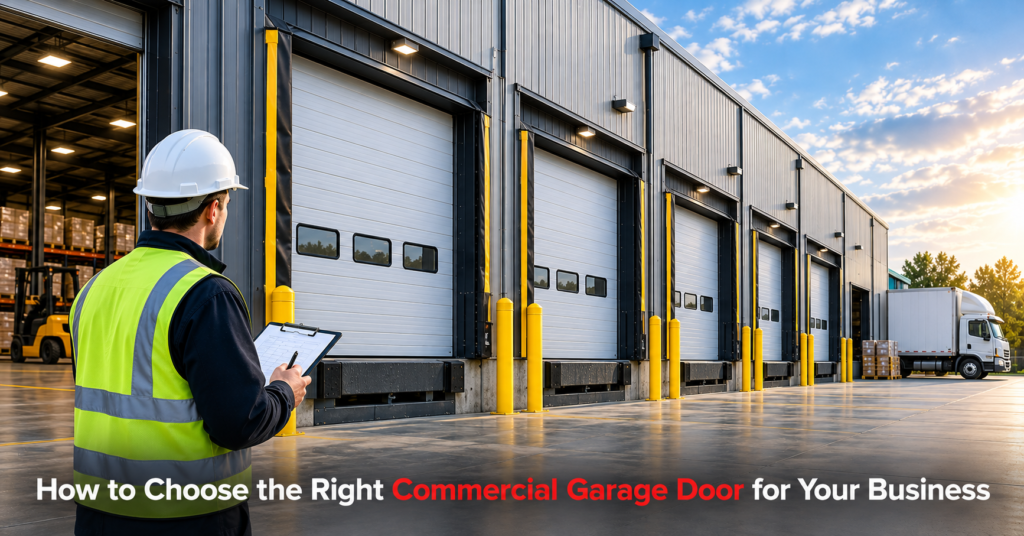
Choosing a commercial garage door isn’t like picking one for a home. It’s a decision that affects daily workflow, security, energy efficiency, and how safely people and vehicles move through a facility every single day. With so many door types, materials, and features available, it’s easy to feel overwhelmed before you’ve even started comparing options.
At VP Commercial Garage Doors, we walk businesses through this decision regularly, and the process gets a lot simpler once you break it down into a few key questions: how the door will actually be used, what environment it needs to handle, and what your industry specifically requires. This guide covers exactly what to consider when choosing the right commercial garage door for your business.
Start With How the Door Will Actually Be Used
Before comparing door types or materials, it helps to get specific about daily usage. How many times will the door cycle in a typical day? What size and type of vehicles need to pass through it? Will it be exposed to extreme temperatures, heavy security risks, or constant high traffic? A delivery warehouse with several doors cycling constantly has very different needs than a storage facility that prioritizes insulation and security over speed.
Understanding Commercial Garage Door Types
Sectional Steel Doors
Sectional doors are one of the most common choices for warehouses and industrial facilities, offering strength, insulation options, and reliable durability for moderate-to-frequent use.
Rolling Steel Doors
Rolling doors coil up compactly, making them a strong option where overhead space is limited. They tend to hold up well as a robust, high-security choice in facilities with varied daily conditions.
High-Speed Doors
For facilities with high dock turnover, high-speed doors are built to cycle rapidly without sacrificing durability, which matters most where minimizing open-door time has a real impact on both energy efficiency and workflow.
Full-View or Glass Doors
Full-view doors, often built with tempered glass, work well for showrooms or spaces where natural light and visibility matter more than heavy security. They can also be customized with tinting or glazing depending on the look a business wants.
Choosing the Right Material
Material choice affects durability, appearance, and how well a door holds up in its specific environment. Steel offers strength and is a strong fit for security-focused installations. Aluminum is lighter and more corrosion-resistant, which can be an advantage in certain settings. Insulated options, often built with a polyurethane core, add another layer of consideration for facilities that need better temperature control.
Matching the Opener to the Door
The opener needs to match the door’s size, weight, and how often it will cycle throughout the day. Openers generally fall into duty categories, from light-duty units suited to occasional use, to heavier-duty operators built for continuous, high-cycle demand. Trolley-style openers typically pair well with sectional doors, while jackshaft openers are often a better fit for high-lift configurations or rolling steel doors. Getting this match right affects both day-to-day reliability and how long the opener lasts under real-world use.
Don’t Overlook Space Constraints
Available headroom and side-room clearance directly affect which door types and track configurations are even possible for a given opening. Facilities with limited overhead space may need low-headroom track systems or a rolling steel design rather than a standard sectional door. This is one of the most commonly overlooked factors until it’s too late in the planning process, so it’s worth confirming early.
Insulation and Climate Considerations
For facilities in a climate with real seasonal extremes, insulation isn’t a minor add-on — it directly affects interior temperature stability, employee comfort, and how well temperature-sensitive inventory is protected. Insulated doors with proper sealing reduce the strain of both winter cold and summer heat on a facility’s climate control, something we cover in more depth in our guide on how Illinois weather affects commercial garage doors.
Security Features to Consider
Every commercial door needs some level of protection against unauthorized access, but the right level depends on the facility. Standard slide locks work for many businesses, while others benefit from more advanced options like chain hoist locks or integration with an electronic access control system. It’s worth matching security features to the actual risk profile of the facility rather than defaulting to the most basic option available.
Safety Features That Should Never Be Optional
Regardless of door type, certain safety features shouldn’t be treated as optional extras. Reliable photo-eye sensors that stop the door if the beam is broken, along with sensing edges that trigger an automatic reverse on contact, are essential for any commercial setting with regular foot or vehicle traffic. We cover this in more detail in our guide to industrial garage door safety features, since the stakes are especially high in busier facilities.
Matching the Door to Your Industry
Different industries genuinely need different doors. Manufacturing facilities typically need heavy-duty doors built to withstand frequent use and harsher environments. Warehouses often prioritize insulated sectional doors for a balance of durability and climate control. Fire stations need doors built for fast, reliable cycling. Retail spaces or showrooms may prioritize appearance and visibility over raw durability. Thinking about your specific industry’s demands, rather than choosing a generic option, leads to a door that actually fits how the space is used.
Aesthetic and Branding Considerations
A commercial garage door isn’t just functional — it’s often a visible part of a building’s exterior. Choosing a door that complements the building’s design, and even incorporating color or finish choices that reflect a business’s branding, can make a meaningful difference in how a facility presents itself, without compromising on performance.
Common Mistakes When Choosing a Commercial Door
Choosing the most familiar option instead of the right one for actual usage needs. A door that isn’t rated for how often it will actually cycle tends to wear out faster and create more frequent service needs.
Ignoring space constraints until installation day. Headroom and side-room limitations should be confirmed early, not discovered after a door has already been selected.
Treating safety features as optional. Sensors and safety edges are essential, not upgrades, especially in any facility with regular vehicle or foot traffic.
Overlooking insulation needs. Skipping insulation because it seems unnecessary often becomes a regretted decision once seasonal extremes set in.
Why Working With a Commercial Specialist Matters
Choosing the right commercial garage door involves balancing usage patterns, space constraints, safety requirements, and industry-specific needs — which is a lot to work through alone. VP Commercial Garage Doors helps businesses evaluate their actual operational needs and match them to the right door type, material, and opener, so the final choice supports the business for years rather than creating problems down the road. This decision also connects directly to how to increase the lifespan of your commercial overhead door, since choosing the right door from the start is the foundation everything else builds on.
FAQs About Choosing a Commercial Garage Door
What’s the most important factor when choosing a commercial garage door?
How the door will actually be used day to day — cycle frequency, vehicle size, and environmental conditions — should guide every other decision that follows.
Does insulation really matter for every commercial facility?
It matters most for facilities dealing with real seasonal temperature extremes or storing temperature-sensitive goods, though most businesses benefit from some level of insulation.
How do I know which opener is right for my door?
The opener should match your door’s size, weight, and daily cycle frequency. A professional can help confirm the right duty category and drive type for your specific door.
Are safety features different depending on the type of door I choose?
The core safety features, like photo-eye sensors and sensing edges, should be present regardless of door type, though certain door styles may have additional safety considerations.
Can a commercial garage door really reflect a business’s branding?
Yes. Color, finish, and design choices can complement a building’s exterior and reinforce a business’s overall appearance without sacrificing functionality.
Contact VP Commercial Garage Doors
If your business needs dependable Commercial Garage Door Repair, Commercial Overhead Door Installation, Commercial Garage Door Maintenance, Rolling Steel Door Repair, High-Speed Commercial Doors, Dock Leveler Repair, Loading Dock Equipment Service, or Emergency Commercial Garage Door Repair, trust the experienced team at VP Commercial Garage Doors.
We proudly serve businesses throughout Elk Grove Village, Schaumburg, Naperville, Aurora, Buffalo Grove, Addison, Franklin Park, Palatine, Wheeling, Oak Brook, and surrounding Illinois communities.
Phone: 847 380 6448
Website: https://vpcommercialgaragedoors.com/
Call VP Commercial Garage Doors today to schedule professional commercial garage door service and keep your warehouse or industrial facility operating safely, efficiently, and without costly interruptions.
Final Thoughts
Choosing the right commercial garage door comes down to understanding how it will actually be used, not just picking the most familiar or common option. Usage frequency, space constraints, material, insulation, security, and safety features all play a role, and getting these decisions right from the start sets a business up for years of reliable performance.
If you’re evaluating a new commercial door and aren’t sure where to start, working through these factors with a specialist is the simplest way to make a confident, well-informed decision.
Summary
Choosing the right commercial garage door involves assessing daily usage frequency, selecting the appropriate door type and material, matching the opener to the door’s weight and cycle demands, and confirming insulation, security, and safety features fit the facility’s specific industry and environment.