

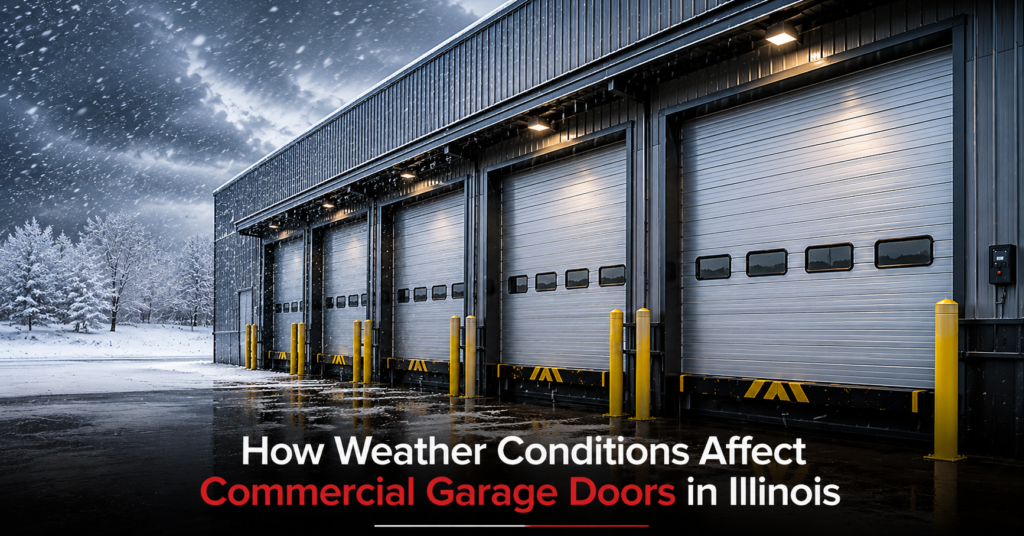
Illinois doesn’t do mild weather. Winters bring bitter cold, snow, and ice. Summers swing into hot, humid stretches that can feel just as extreme in the opposite direction. Spring brings rain and rapid freeze-thaw cycles, and fall is really just a short warning before winter returns. For a commercial garage door that operates outdoors year-round, that kind of seasonal swing takes a real toll.
At VP Commercial Garage Doors, we service facilities through every one of these seasons, and the patterns are consistent: the doors that hold up best are the ones maintained with the local climate in mind, not treated the same way year-round. This guide breaks down exactly how Illinois weather affects commercial doors, season by season, and what facilities can do to stay ahead of it.
Why Illinois Weather Is Especially Hard on Commercial Doors
Commercial doors already handle more daily wear than residential ones simply from frequent cycling. Add a climate that swings from deep freezes to humid heat within the same year, and every component — springs, seals, hardware, panels — is dealing with constant expansion, contraction, and moisture exposure. Weather-related stress doesn’t just affect comfort; it directly shortens the useful life of components that are already working hard from daily use.
Winter: Cold, Snow, and Ice
Brittle, More Fragile Springs
Cold temperatures make metal more brittle, and torsion springs are especially vulnerable. A spring that’s already showing wear is far more likely to snap during a cold snap than during warmer months, since low temperatures reduce the metal’s flexibility right when the spring is under full tension.
Contracted Metal and Misalignment
Metal contracts in the cold, which can throw off the precise spacing tracks and hardware depend on. Even a small amount of contraction can cause binding, jerking, or uneven movement that wasn’t present in warmer weather.
Frozen Door Bottoms and Water Pooling
Melting snow or ice near the base of a door can refreeze overnight, sealing the door shut or creating resistance during operation. This is a common cause of winter service calls, especially for docks where drainage isn’t properly maintained.
Thickened Lubricant and Stiff Hardware
Standard lubricants can thicken in cold weather, increasing friction instead of reducing it. This makes rollers, hinges, and springs work harder than they should, accelerating wear right when the system is already under more stress from the cold.
Cracked or Hardened Weatherstripping
Rubber seals and weatherstripping become stiff and brittle in freezing temperatures, sometimes cracking outright. Once compromised, they let in drafts and moisture, undermining both energy efficiency and protection against the elements.
Spring: Thaw, Rain, and Rust
Moisture and Corrosion Risk
As snow melts and spring rain sets in, metal components face prolonged moisture exposure. Without proper lubrication and protective maintenance, this is when rust and corrosion tend to appear on hardware, tracks, and hinges.
Freeze-Thaw Stress on Hardware
Illinois spring weather often swings between freezing nights and milder days, and that repeated freeze-thaw cycle puts ongoing stress on components already weakened by winter. This is one of the most important times of year to catch developing issues before summer use ramps up.
Increased Door Use After Winter
As facilities return to fuller activity levels after winter, doors that were quietly struggling during colder months often reveal their issues under increased use. Spring is a practical time for a full inspection before the pace of operations increases.
Summer: Heat and Humidity
Spring Tension Changes From Heat Expansion
Heat causes metal to expand, which can subtly affect spring tension and lead to a door that feels slightly imbalanced compared to how it operated in cooler months.
Panel Expansion and Alignment Issues
Door panels can expand in high heat, sometimes affecting how smoothly the door travels along the track. This is usually minor but worth monitoring, especially on older doors.
Lubricant Breakdown
Extreme heat can cause lubricants to break down or evaporate faster than expected, leaving components dry and more prone to friction-related wear during a season when doors are often cycling just as frequently as in cooler months.
Sun Glare and Photo-Eye Sensor Interference
Direct summer sun can interfere with photo-eye safety sensors, sometimes causing the door to behave as though an obstruction is present. Facilities with docks facing direct afternoon sun should have sensors checked and shielded if this becomes a recurring issue.
Fall: Preparing for the Next Winter
Fall is the ideal window to prepare a commercial door for the harsher months ahead. Lubrication, weatherstripping checks, and a full inspection during this transition period help components enter winter in the best possible condition, rather than facing the cold with wear that built up over the previous year.
Wind, Storms, and Impact Risk
Illinois sees its share of severe storms, high winds, and occasionally hail, all of which can affect a commercial door directly. High winds can stress panels and hardware, especially on doors with worn components, while storm debris can dent or damage panels and tracks. After any significant storm, a quick inspection helps catch damage before it affects daily operation.
How Insulation Helps Illinois Facilities Handle Weather Extremes
Insulated commercial doors offer a real advantage in a climate like Illinois’s, helping regulate interior temperature whether it’s well below freezing or hot and humid outside. Beyond comfort, proper insulation reduces the strain on HVAC systems and helps protect temperature-sensitive inventory from the kind of swings that come with a four-season climate.
A Seasonal Maintenance Checklist for Illinois Commercial Doors
- Lubricate rollers, hinges, and springs ahead of both winter and summer extremes
- Inspect weatherstripping and seals each fall, replacing anything cracked or hardened
- Clear drainage near dock doors to prevent water pooling and freezing
- Check spring tension and door balance after major seasonal transitions
- Inspect photo-eye sensors for sun interference during summer months
- Schedule a full inspection after any significant storm or high-wind event
Why Working With a Local Commercial Specialist Matters
Weather-related wear isn’t something a generic maintenance schedule accounts for — it takes familiarity with how Illinois seasons actually affect commercial door systems. VP Commercial Garage Doors builds maintenance recommendations around the climate our clients actually operate in, not a one-size-fits-all national schedule. This is part of why routine commercial garage door maintenance matters more here than in milder climates, and why preventive maintenance timed to the seasons makes such a difference.
Where We Help Illinois Businesses Weatherproof Their Doors
We work with facilities throughout the Chicagoland area, including Westchester, Wheeling, Itasca, and Hinsdale, along with many surrounding communities. Wherever your facility is located, our team understands how the local climate affects your equipment and can help you prepare for whatever the next season brings.
FAQs About Weather and Commercial Garage Doors in Illinois
What’s the biggest weather-related risk for commercial doors in Illinois winters?
Spring failure is one of the most serious risks, since cold temperatures make metal more brittle and springs are already under significant tension.
Can summer heat really affect how a commercial door operates?
Yes. Heat can subtly change spring tension and cause panel expansion, and it also accelerates lubricant breakdown, which increases friction and wear.
How often should weatherstripping be checked in a climate like Illinois’s?
At least once a year, ideally in the fall, since cracked or hardened seals are common after a full winter season.
Does insulation really make a noticeable difference for Illinois facilities?
Yes. Insulated doors help stabilize interior temperature through both extreme cold and summer heat, reducing strain on HVAC systems and protecting sensitive inventory.
Should a commercial door be inspected after a storm?
Yes. High winds and storm debris can cause damage that isn’t always obvious right away, so a quick inspection afterward is a good precaution.
Contact VP Commercial Garage Doors
If your business needs dependable Commercial Garage Door Repair, Commercial Overhead Door Installation, Commercial Garage Door Maintenance, Rolling Steel Door Repair, High-Speed Commercial Doors, Dock Leveler Repair, Loading Dock Equipment Service, or Emergency Commercial Garage Door Repair, trust the experienced team at VP Commercial Garage Doors.
We proudly serve businesses throughout Elk Grove Village, Schaumburg, Naperville, Aurora, Buffalo Grove, Addison, Franklin Park, Palatine, Wheeling, Oak Brook, and surrounding Illinois communities.
Phone: 847 380 6448
Website: https://vpcommercialgaragedoors.com/
Call VP Commercial Garage Doors today to schedule professional commercial garage door service and keep your warehouse or industrial facility operating safely, efficiently, and without costly interruptions.
Final Thoughts
Illinois weather doesn’t give commercial garage doors much of a break — cold winters, humid summers, and everything in between all leave their mark over time. Understanding how each season affects the system is the first step toward a maintenance routine that actually keeps pace with the climate, rather than reacting to it after something fails.
If your facility’s door has felt different depending on the season, that’s not a coincidence — it’s worth having it evaluated with Illinois weather specifically in mind.
Summary
Illinois weather significantly affects commercial garage doors: winter cold makes springs brittle and hardware stiff, spring brings moisture and freeze-thaw stress, and summer heat affects spring tension, lubrication, and sensor performance. Seasonal maintenance and proper insulation help commercial doors withstand these year-round extremes.