

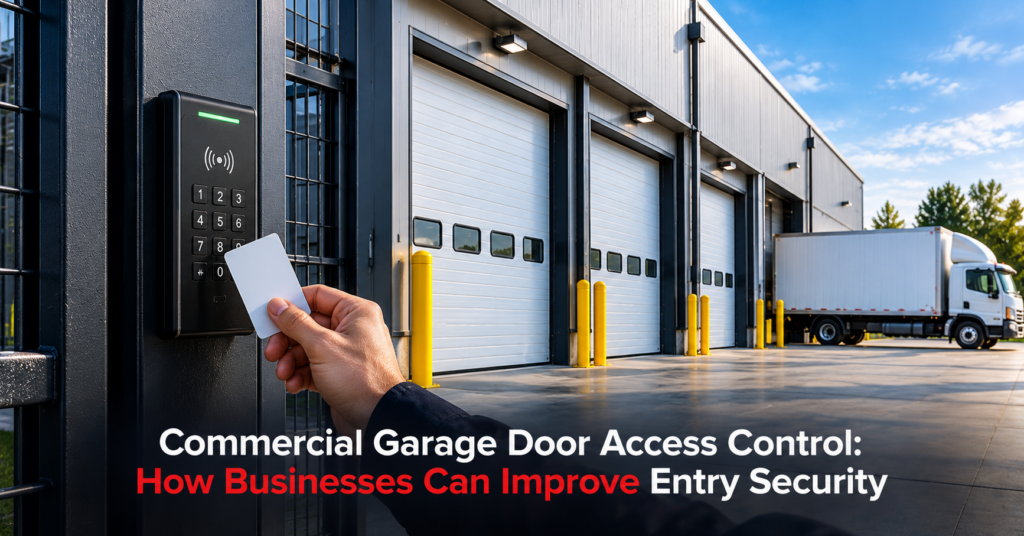
Garage door access control is one of the most overlooked parts of commercial security. A commercial garage door is often one of the largest, most frequently used entry points into a facility — which also makes it one of the easiest to overlook from a security standpoint. Businesses invest heavily in securing front entrances, offices, and sensitive areas, while the loading dock or service bay door sometimes still relies on a basic lock or a shared remote that’s been passed around for years.
At VP Commercial Garage Doors, access control is one of the most impactful upgrades a business can make to its overall security posture. This guide covers the access control methods available for commercial garage doors, how they work, and what businesses should consider when improving entry security.
Why Entry Security Matters at Commercial Garage Doors
A garage door isn’t just a physical barrier — it’s a control point for who and what enters a facility. Without proper access control, businesses have limited ability to track who’s coming and going, restrict access to authorized personnel only, or respond quickly if a credential is lost or an employee leaves the company. Given how often these doors are used throughout a workday, they deserve the same level of security attention as any other entry point into the building.
Access Control Methods for Commercial Garage Doors
Keypad Entry
Keypad systems allow authorized users to enter a code to open the door, offering a straightforward upgrade over a standard lock. Codes can be changed as needed, which is useful when managing staff turnover or temporary access needs.
RFID Cards and Key Fobs
Card and fob-based systems let each authorized user carry a unique credential that’s scanned at the door. This approach makes it easy to issue or deactivate individual credentials without affecting anyone else’s access.
Rolling Code Remote Technology
Traditional remotes that always send the same signal are vulnerable to code-grabbing devices that intercept and reuse that signal. Rolling code technology generates a new code with every use, making intercepted signals useless for a repeat attempt and significantly improving security over older fixed-code remotes.
Mobile App and Smartphone Access
Many modern systems allow authorized users to unlock a garage door directly from a smartphone app, removing the need for a physical credential altogether. This approach also makes it easier to grant or revoke access remotely, without needing to physically collect a card or fob.
Biometric Access
For facilities with particularly sensitive security needs, biometric access — using fingerprints or similar identifiers — offers a higher level of certainty that the person requesting entry is who they claim to be, since biometric credentials can’t be easily shared or duplicated the way a code or card can.
Customizable Access Levels and Scheduling
Not every employee needs the same level of access. A well-designed system allows businesses to restrict entry by role, by area, or by time of day — for example, permitting warehouse staff access during shift hours only, while restricting after-hours entry to a smaller group of authorized personnel. This kind of granular control significantly reduces the risk of unauthorized access without complicating day-to-day operations for the people who do need entry.
Real-Time Monitoring and Audit Trails
One of the most valuable features of a modern access control system is the audit trail it creates automatically. Every entry attempt — successful or not — gets logged, giving businesses a clear record of who accessed the facility and when. This kind of visibility is useful not just for identifying suspicious activity, but for general oversight and accountability across a facility’s daily operations.
Integrating Access Control With Broader Security Systems
Garage door access control doesn’t have to operate in isolation. Many systems can integrate with existing security infrastructure, including surveillance cameras and alarm systems, creating a more complete security picture rather than a series of disconnected tools. This kind of integration means an unusual entry attempt at the garage door can trigger camera footage review or an alert, rather than going unnoticed until someone happens to check the logs.
Managing Employee Access Over Time
Access control is only as strong as how consistently it’s managed. Businesses should have a clear process for issuing new credentials when someone joins, and just as importantly, revoking access immediately when someone leaves or changes roles. A shared code or physical key that never gets updated defeats much of the purpose of having an access control system in the first place. Reviewing who has active access on a regular basis helps catch outdated permissions before they become a real vulnerability.
Access Control vs. Safety Features: Understanding the Difference
It’s worth distinguishing access control from safety features, since the two serve different purposes even though they’re both part of a well-equipped commercial door. Access control determines who is allowed to operate the door. Safety features, like auto-reverse sensors and safety edges covered in our guide to industrial garage door safety, protect people and property during the door’s actual operation. A genuinely secure and safe commercial door needs both working together, not one in place of the other.
Common Access Control Mistakes Businesses Make
Relying on a single shared code or remote for everyone. This makes it impossible to track individual access or revoke one person’s entry without changing everyone’s.
Forgetting to update access after staff changes. Former employees retaining active credentials is one of the most common and easily preventable security gaps.
Choosing outdated, fixed-code remote technology. Older remotes are more vulnerable to interception than modern rolling code systems.
Treating access control as separate from overall security planning. Entry security works best when it’s considered alongside cameras, alarms, and other protective measures, not as an afterthought.
Why Working With a Commercial Specialist Matters
Improving entry security at a commercial garage door involves more than just installing new hardware — it takes matching the right access control method to how the facility actually operates. VP Commercial Garage Doors helps businesses evaluate their current setup and implement access control solutions that genuinely fit their security needs and daily workflow.
Where We Help Businesses Improve Entry Security
We work with facilities throughout the Chicagoland area, including Elk Grove Village, Niles, Park Ridge, and Rolling Meadows, along with many surrounding communities. Wherever your business is located, our team can help you evaluate and upgrade your commercial garage door’s access control system.
FAQs About Commercial Garage Door Access Control
What’s the most secure type of access control for a commercial garage door?
Biometric access generally offers the highest level of certainty, though a well-managed card, fob, or mobile credential system combined with rolling code technology provides strong security for most businesses.
Why is rolling code technology better than a standard remote?
Standard remotes send the same fixed signal every time, which can be intercepted and reused. Rolling code technology generates a new code with each use, making an intercepted signal useless afterward.
Can access control systems track who enters and exits a facility?
Yes. Most modern systems automatically log every entry attempt, creating an audit trail that supports both security monitoring and general operational oversight.
How often should employee access credentials be reviewed?
Regularly, and especially any time someone leaves the company or changes roles, to make sure access levels always reflect who should actually have entry.
Can garage door access control integrate with existing security cameras or alarms?
In many cases, yes. Integration allows an unusual access attempt to trigger camera footage review or alerts, creating a more complete security response.
Garage Doors
If your business needs dependable Commercial Garage Door Repair, Commercial Overhead Door Installation, Commercial Garage Door Maintenance, Rolling Steel Door Repair, High-Speed Commercial Doors, Dock Leveler Repair, Loading Dock Equipment Service, or Emergency Commercial Garage Door Repair, trust the experienced team at VP Commercial Garage Doors.
We proudly serve businesses throughout Elk Grove Village, Schaumburg, Naperville, Aurora, Buffalo Grove, Addison, Franklin Park, Palatine, Wheeling, Oak Brook, and surrounding Illinois communities.
Phone: 847 380 6448
Website: VP Commercial Garage Doors
Call VP Commercial Garage Doors today to schedule professional commercial garage door service and keep your warehouse or industrial facility operating safely, efficiently, and without costly interruptions.
Final Thoughts
A commercial garage door deserves the same level of security attention as any other entry point into a facility, especially given how frequently it’s used and how much access it controls. Upgrading from a shared code or outdated remote to a modern access control system — with proper credential management and real-time monitoring — closes a security gap that many businesses don’t realize they have until it’s tested.
If your facility’s garage door still relies on outdated or shared access methods, it’s worth evaluating whether a modern access control system is overdue.
Summary
Commercial garage door access control improves entry security through methods like keypads, RFID cards, rolling code remotes, mobile app access, and biometric credentials. Combined with customizable access levels, real-time monitoring, and integration with existing security systems, these tools help businesses track entry, restrict unauthorized access, and manage employee credentials effectively.