

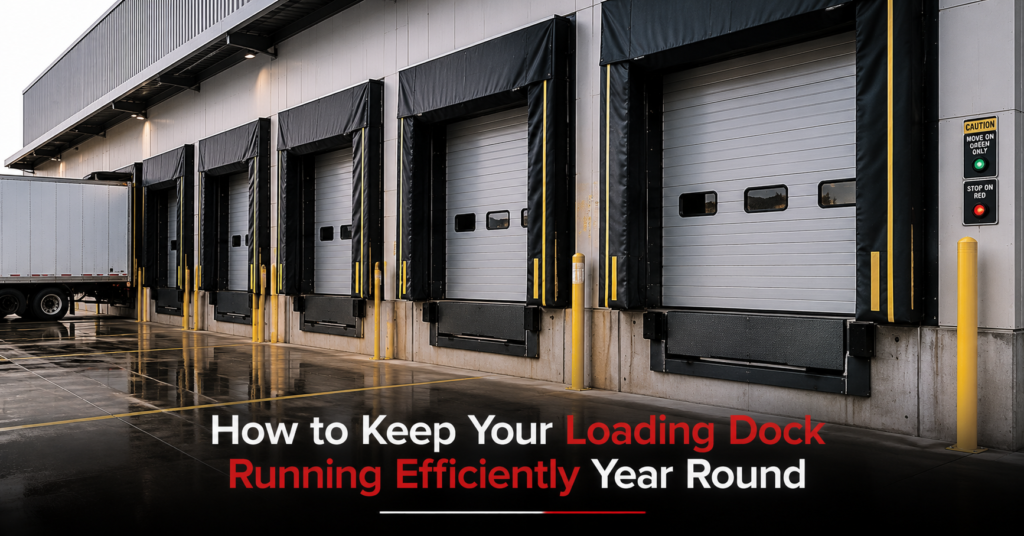
A loading dock rarely gets a break. It’s busy in the middle of summer heat, buried in snow during a January cold snap, and everything in between. Facilities that treat dock maintenance as a once-a-year task usually end up chasing problems reactively, season after season. The ones that stay efficient all year approach it differently — with a routine that shifts alongside the weather instead of ignoring it.
At VP Commercial Garage Doors, we work with facilities through every season of the Illinois calendar, and the pattern is clear: keeping a loading dock running efficiently year-round isn’t about one big fix. It’s about a consistent rhythm of seasonal attention that keeps equipment ready for whatever the next few months bring.
Why Year-Round Consistency Matters More Than Seasonal Fixes
A dock that only gets attention when something breaks is always playing catch-up. Equipment that’s been quietly struggling through one season often fails right as the next one begins, since accumulated wear doesn’t reset itself just because the calendar changes. A facility that builds seasonal checks into its routine catches these issues while they’re still minor, keeping the dock consistently efficient instead of cycling between smooth operation and unexpected downtime.
Spring: Recovering From Winter and Resetting the System
Spring is the time to assess what winter left behind. Freezing temperatures and road salt take a toll on mechanical components, so this is the season to inspect for corrosion, check hardware that may have loosened, and apply fresh lubrication to rollers, hinges, and dock leveler components after months of cold-weather strain. It’s also worth clearing away any debris that accumulated over winter and confirming drainage is working properly as spring rain sets in.
Summer: Managing Heat, Sun, and Heavy Use
Summer heat affects equipment differently than winter cold, but it’s just as demanding. Direct sun exposure can accelerate wear on seals, gaskets, and exterior surfaces, while heat can cause lubricants to break down faster than expected. This is a good season to check that all hardware remains tight and free of corrosion, and to confirm dock seals are still forming a proper barrier, since summer humidity adds its own strain on rubber components.
Fall: Preparing Equipment Before Conditions Shift
Fall is the most important transition window of the year. This is when a heating system, if the dock relies on one, should be tested before temperatures drop. It’s also worth checking for moisture accumulation on the dock floor, since fall rain combined with cooler temperatures can create slippery conditions if drainage isn’t functioning properly. Getting ahead of these issues in the fall means equipment enters winter already prepared, rather than facing the cold with problems that built up unnoticed.
Winter: Protecting the Most Vulnerable Components
Winter is typically the hardest season on a loading dock. Mechanical parts like dock levelers and lifts are especially vulnerable to freezing temperatures, and snow or ice buildup near the dock can create both operational slowdowns and real safety hazards. This is the season to monitor mechanical components closely, keep the area around dock doors clear of ice, and address any issues quickly, since cold weather tends to make small problems worse faster than in milder months. It’s also worth reviewing our guide on how Illinois weather affects commercial garage doors for a deeper look at what winter specifically does to door hardware and seals.
The Equipment That Needs Attention All Year
Dock Levelers
Levelers handle constant mechanical stress and are especially sensitive to seasonal extremes, making them one of the most important components to check every season, not just once a year.
Seals and Shelters
Seals and shelters protect against weather, dust, and temperature loss, but they wear from repeated use and environmental exposure. Cracks, tears, or sagging material let in moisture, which can lead to slippery floors and reduced energy efficiency.
Bumpers and Guides
Bumpers absorb constant impact from docking trailers, and worn or damaged bumpers should be inspected regularly to confirm they’re still providing adequate protection for both the building and the vehicles using it.
Lighting
Adequate lighting affects both safety and efficiency, since drivers rely on it for trailer alignment and staff rely on it for safe movement around the dock. Burned-out bulbs and flickering fixtures are a frequently overlooked maintenance issue that’s simple to fix but easy to ignore.
Communication Systems
Signal lights and other communication tools between drivers and dock staff need periodic testing to confirm they’re still functioning correctly, since a failure here creates delays and safety risks regardless of how well the rest of the equipment is performing.
Building a Simple Seasonal Maintenance Calendar
- Spring: Inspect for winter damage, lubricate moving parts, clear debris, confirm drainage
- Summer: Check hardware for corrosion, inspect seals for heat-related wear, monitor lubricant condition
- Fall: Test heating systems, check for moisture accumulation, prepare equipment for winter stress
- Winter: Monitor mechanical components closely, keep the dock area clear of ice and snow, address issues quickly
Reviewing this list at the start of each season, rather than waiting for a problem to appear, is what keeps a loading dock consistently efficient rather than reactive.
Common Mistakes That Break Year-Round Consistency
Treating maintenance as an annual event. A once-a-year inspection can’t catch the different stresses each season places on different components.
Ignoring lighting and communication systems. These are easy to overlook compared to mechanical equipment, but they directly affect both safety and daily efficiency.
Waiting until a problem is visible. Many seasonal issues, like early corrosion or a slowly failing seal, don’t become obvious until they’ve already affected performance.
Treating dock equipment as disconnected systems. Levelers, seals, bumpers, and doors all work together as part of overall loading dock equipment, and treating them separately makes it easier for gaps to form between checks.
Why Working With a Commercial Specialist Matters
Keeping a loading dock efficient across every season takes more than good intentions — it takes a maintenance rhythm built around how the local climate actually behaves. VP Commercial Garage Doors helps facilities build seasonal routines around commercial garage door maintenance and related dock equipment, so nothing gets left until it becomes a bigger problem.
Where We Help Facilities Stay Efficient Year-Round
We work with facilities throughout the Chicagoland area, including Gilberts, Hillside, Island Lake, and Hampshire, along with many surrounding communities. Wherever your facility is located, our team can help you build a seasonal maintenance routine that keeps your dock running smoothly through every part of the year.
FAQs About Year-Round Loading Dock Efficiency
How often should a loading dock be inspected throughout the year?
At minimum, once each season, with additional checks after significant weather events or any noticeable change in equipment performance.
Which season is typically the hardest on loading dock equipment?
Winter tends to be the most demanding, since freezing temperatures affect mechanical components like dock levelers, and snow or ice creates additional safety concerns.
Do dock seals really need seasonal attention?
Yes. Seals face different stress in summer heat versus winter cold, and regular inspection helps catch cracking, sagging, or gaps before they affect energy efficiency and safety.
Is lighting really part of a maintenance routine, or just a minor fix?
It’s more important than most facilities realize. Poor lighting affects both safety and efficiency, and it’s one of the most commonly overlooked maintenance items.
Can seasonal maintenance really prevent unexpected downtime?
Yes. Most equipment failures are preceded by gradual wear that seasonal inspections are designed to catch early, before it turns into an unplanned breakdown.
Contact VP Commercial Garage Doors
If your business needs dependable Commercial Garage Door Repair, Commercial Overhead Door Installation, Commercial Garage Door Maintenance, Rolling Steel Door Repair, High-Speed Commercial Doors, Dock Leveler Repair, Loading Dock Equipment Service, or Emergency Commercial Garage Door Repair, trust the experienced team at VP Commercial Garage Doors.
We proudly serve businesses throughout Elk Grove Village, Schaumburg, Naperville, Aurora, Buffalo Grove, Addison, Franklin Park, Palatine, Wheeling, Oak Brook, and surrounding Illinois communities.
Phone: 847 380 6448
Website: https://vpcommercialgaragedoors.com/
Call VP Commercial Garage Doors today to schedule professional commercial garage door service and keep your warehouse or industrial facility operating safely, efficiently, and without costly interruptions.
Final Thoughts
A loading dock that runs efficiently in every season isn’t the result of luck — it’s the result of a maintenance rhythm that shifts with the calendar instead of ignoring it. Spring resets, summer upkeep, fall preparation, and winter vigilance each play a role in keeping the dock consistently reliable, rather than cycling through predictable seasonal breakdowns.
If your facility’s maintenance routine hasn’t changed with the seasons, that’s the simplest place to start building year-round consistency from here forward.
Summary
Keeping a loading dock running efficiently year-round requires a seasonal maintenance routine: spring recovery and lubrication, summer hardware and seal checks, fall preparation for cold weather, and winter monitoring of vulnerable mechanical components like dock levelers. Consistent seasonal attention prevents unexpected downtime and keeps equipment reliable in every season.