

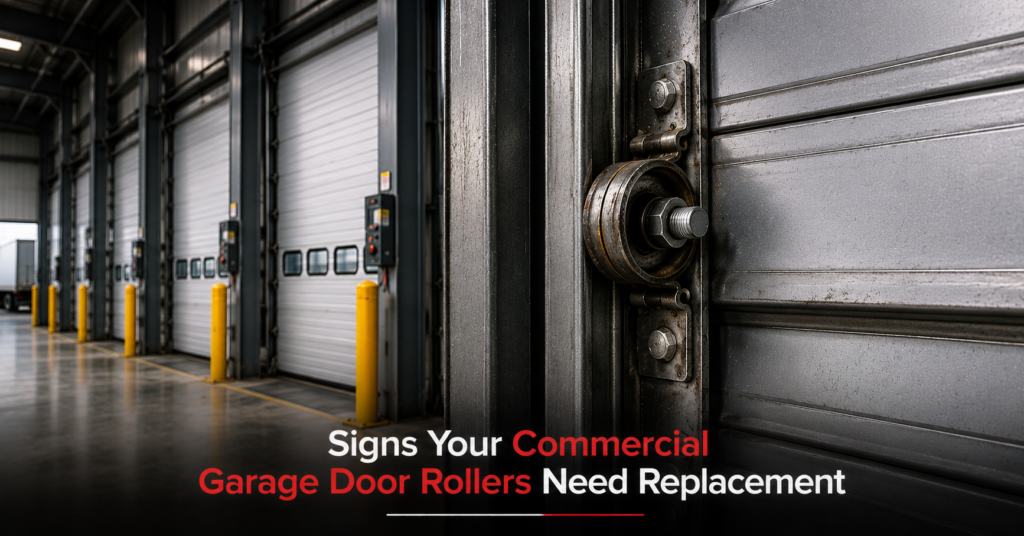
Rollers don’t get much attention until something feels wrong. They’re small, mostly hidden inside the track, and easy to forget about compared to springs, cables, or the opener. But rollers are what let a commercial garage door glide smoothly through every single cycle, and when they start failing, the entire system feels it.
At VP Commercial Garage Doors, worn rollers are one of the most common issues we find during routine inspections — and one of the easiest to catch early if you know what to look for. This guide covers the clearest signs that commercial garage door rollers are due for replacement and why catching them early matters more than most facilities realize.
What Rollers Do and Why They Wear Out
Rollers connect the door to the track, allowing it to travel smoothly along its path with every open and close cycle. On a commercial door, that’s a lot of cycles — often dozens or hundreds a day, each one putting a small amount of wear on the roller wheel and its bearing. Over time, heat, dust, moisture, and constant friction take their toll, and even a well-built roller eventually reaches the end of its usable life.
Sign #1: Grinding, Squeaking, or Rattling Noise
Noise is usually the first sign something’s off. A grinding sound often points to metal-on-metal contact from a deteriorating steel roller, while squeaking is more common with dry or cracked nylon rollers. A little sound during operation is normal, but if fresh lubrication doesn’t quiet things down, the rollers themselves are likely the problem, not just a lack of grease.
Sign #2: Jerky or Hesitant Movement
A door that hesitates, jerks, or sticks partway through its cycle is often struggling with roller issues rather than a problem with the opener itself. Smooth operation depends on rollers moving evenly along the track, and once they wear unevenly, that consistency breaks down.
Sign #3: Visible Cracks, Chips, or Flat Spots
Physical damage is the most straightforward sign of all. A roller wheel with cracks, chips, or flat spots can’t roll smoothly through the track anymore. Instead, it catches and drags, creating friction that puts uneven stress on surrounding hardware with every single cycle.
Sign #4: Excessive Vibration During Operation
A healthy door moves with a fairly steady, consistent motion. Worn rollers often introduce noticeable vibration or shaking during operation, especially as they lose their round shape or the bearings inside start to fail.
Sign #5: The Door Looks Crooked or Comes Off Track
This is one of the more serious signs, and it shouldn’t be ignored. If a door appears crooked while moving, or has slipped out of its track more than once, worn rollers are a likely cause. A door that repeatedly comes off track is both a functional problem and a real safety concern, especially in a commercial setting with people and equipment moving nearby.
Sign #6: Rust or Corrosion on Steel Rollers
Steel rollers exposed to moisture, humidity, or road salt tracked in during winter can develop rust over time. Corroded rollers don’t move as smoothly and are more prone to sudden failure, which makes this an especially relevant sign in a climate that sees real seasonal extremes.
Sign #7: Lubrication Doesn’t Solve the Noise
Lubrication solves a lot of minor noise issues, but not all of them. If a fresh application doesn’t improve the sound or movement, that’s a strong signal that the rollers have moved past a maintenance issue and into replacement territory.
Why Ignoring Worn Rollers Creates Bigger Problems
Rollers rarely fail in isolation. As they wear, the door has to work harder to move smoothly, which puts additional strain on the opener, tracks, and hardware surrounding them. This connects directly to overall door balance, since uneven roller wear often throws off how evenly the door travels. Left unaddressed long enough, worn rollers can contribute to a bigger mechanical failure — and in a commercial setting, that often means unplanned commercial garage door downtime at the worst possible moment.
Steel vs. Nylon Rollers for Commercial Doors
Steel rollers are durable and handle heavy commercial loads well, but they require regular lubrication and tend to be noisier over time. Nylon or resin rollers run more quietly and don’t need the same lubrication schedule, which makes them a popular upgrade for busy facilities. We cover this comparison in more detail in our guide to high-traffic warehouse door maintenance, since the right roller choice often depends on how frequently your specific door cycles.
Should You Replace Rollers Yourself?
Roller replacement is generally less hazardous than spring or cable work, but commercial doors are large, heavy systems, and rollers sit close to components under tension. For that reason, replacement is best left to a trained technician who can inspect the surrounding hardware, tracks, and balance at the same time — catching related issues that might not be obvious from a quick roller swap alone.
How Often Commercial Rollers Should Be Inspected
Rollers should be checked as part of routine commercial garage door maintenance, with more frequent attention for high-cycle doors. Catching wear early, before a roller cracks or seizes completely, is far simpler than dealing with the aftermath of a door that’s come off its track.
Why Working With a Commercial Specialist Matters
Worn rollers are easy to overlook until they cause a bigger issue, which is why they deserve a close look during every service visit. VP Commercial Garage Doors checks roller condition as a standard part of every inspection, so a small wear pattern gets addressed before it turns into noise complaints, vibration, or a door that’s slipped off track.
Where We Help Businesses With Roller Replacement
We work with facilities throughout the Chicagoland area, including North Aurora, Sugar Grove, Brookfield, and Fox River Grove, along with many surrounding communities. Wherever your facility is located, our team can inspect your rollers and recommend the right fix for how your door is actually being used.
FAQs About Commercial Garage Door Roller Replacement
How do I know if the noise is from the rollers or something else on the door?
If fresh lubrication doesn’t reduce the noise, or the sound is a distinct grinding or squeaking during movement, rollers are a likely cause. A professional inspection can confirm the exact source.
Is it dangerous to keep using a door with worn rollers?
It can be. A door that repeatedly comes off track or moves unpredictably creates a real safety risk, especially around people and equipment in a commercial setting.
Are nylon rollers better than steel rollers for commercial doors?
It depends on usage. Nylon rollers run quieter and need less lubrication, while steel rollers handle heavy loads well but require more consistent maintenance.
Can worn rollers affect other parts of the door system?
Yes. Uneven roller wear puts additional strain on the opener, tracks, and balance, which can accelerate wear across the whole system if left unaddressed.
How often should commercial garage door rollers be inspected?
Rollers should be checked during every routine maintenance visit, with more frequent inspections for doors that cycle heavily throughout the day.
Contact VP Commercial Garage Doors
If your business needs dependable Commercial Garage Door Repair, Commercial Overhead Door Installation, Commercial Garage Door Maintenance, Rolling Steel Door Repair, High-Speed Commercial Doors, Dock Leveler Repair, Loading Dock Equipment Service, or Emergency Commercial Garage Door Repair, trust the experienced team at VP Commercial Garage Doors.
We proudly serve businesses throughout Elk Grove Village, Schaumburg, Naperville, Aurora, Buffalo Grove, Addison, Franklin Park, Palatine, Wheeling, Oak Brook, and surrounding Illinois communities.
Phone: 847 380 6448
Website: https://vpcommercialgaragedoors.com/
Call VP Commercial Garage Doors today to schedule professional commercial garage door service and keep your warehouse or industrial facility operating safely, efficiently, and without costly interruptions.
Final Thoughts
Rollers are small, but they play a big role in how smoothly a commercial garage door operates day to day. Catching the warning signs early — noise, vibration, visible damage, a door that looks crooked — prevents a simple, routine fix from turning into a bigger repair or a safety concern.
If your door has been sounding or moving differently than usual, it’s worth having the rollers checked before the issue grows into something more disruptive.
Summary
Signs that commercial garage door rollers need replacement include grinding or squeaking noise, jerky movement, visible cracks or flat spots, excessive vibration, a door that looks crooked or comes off track, and rust on steel rollers. Addressing worn rollers early prevents bigger mechanical issues and safety risks.