

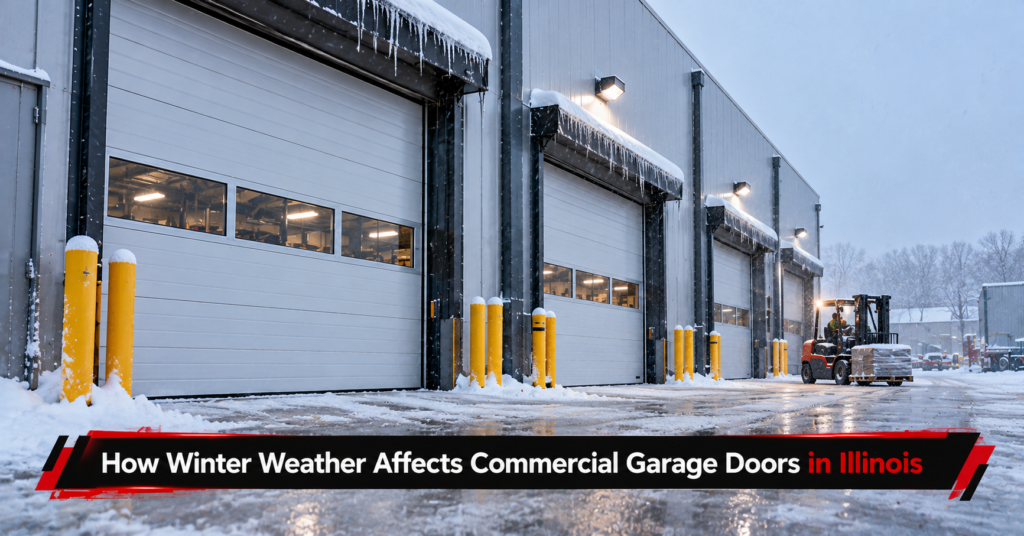
Winter garage door problems are some of the most common reasons Illinois businesses call for emergency service between December and March. Sub-zero mornings, heavy snow, ice, and road salt put every part of a commercial door under stress, and a door that worked fine in October can fail on the first hard freeze. At VP Commercial Garage Doors, we see this pattern every year at warehouses, dock doors, and service bays. This guide explains what winter does to your door and how to protect it before the cold hits.
Why Illinois Winters Are Hard on Commercial Doors
Illinois winters swing between deep cold, heavy snow, freezing rain, and sudden thaws. A commercial door has dozens of moving parts made of metal, rubber, and lubricant, and each one reacts to temperature differently.
Commercial doors also work harder than most. A loading dock door may cycle many times a day, so winter strain adds up quickly.
The biggest winter stressors include:
- Extreme cold that shrinks and stiffens metal and rubber
- Ice and snow buildup at the bottom of the door
- Moisture that freezes inside tracks and hinges
- Road salt that speeds up rust and corrosion
- Repeated freeze-thaw cycles that loosen hardware
How Cold Weather Affects Key Door Components
Springs
Springs carry the full weight of the door. Cold makes metal more brittle, so springs are more likely to snap on a freezing morning. A broken spring usually means the door will not lift at all, and it needs prompt garage door spring repair from a trained technician. Never try to adjust or replace springs yourself, because they hold dangerous tension.
Lubricants
Many standard lubricants thicken in the cold. When grease stiffens in rollers and hinges, the door moves slowly, makes noise, and forces the opener to work harder. Using a lubricant made for low temperatures helps parts keep moving freely.
Seals and Weatherstripping
Rubber seals harden and crack in extreme cold. A stiff bottom seal can also freeze to the ground overnight. When the opener pulls the door up, the seal can tear or the door can strain against the ice. Damaged garage door seals also let in drafts, snow, and moisture, which makes it harder to hold steady indoor temperatures.
Openers and Motors
Cold slows an opener’s internal parts and can reduce the performance of its electronics and battery backup. Motors may struggle, hesitate, or stop mid-cycle, especially if the door is already heavy with ice or has tight, frozen rollers. Repeated strain can lead to the need for garage door opener repair.
Tracks and Rollers
Moisture that gets into the track can freeze, creating friction and sticking points. Rollers may crack or seize, and tracks can shift when ice expands. Over time, this leads to misalignment, jerky movement, or a door that jumps off its path.
Panels
Cold makes panels more brittle, so even a small bump from a forklift or delivery truck can cause cracks or dents. Salt spray can also corrode panel edges and bottom sections. Damaged sections may need garage door panel repair before the problem spreads.
Sensors and Controls
Snow, frost, and condensation can block photo-eye sensors or throw them out of alignment. When sensors misread, the door may refuse to close or may reverse for no reason. Since these devices protect people and equipment, any sensor issue should be fixed right away.
Common Winter Garage Door Problems
Facility managers across Illinois report the same issues each season:
- A door that will not open after a freezing night
- Loud popping, grinding, or squealing during operation
- The bottom seal frozen to the floor
- Slow, jerky, or uneven movement
- Doors that stop partway through the cycle
- Drafts and snow blowing in around the edges
- Safety sensors that stop working properly
- Doors that shake or come off track
Winter Preparation Checklist for Commercial Doors
A little preparation in fall prevents most cold-weather breakdowns. Use this checklist before the first freeze:
- Schedule a professional inspection. A full commercial garage door inspection checks springs, cables, tracks, rollers, hinges, and the opener for early wear.
- Replace worn seals. Fresh seals keep out snow, wind, and moisture.
- Lubricate the right parts. Apply cold-rated lubricant to rollers, hinges, and springs. Keep the track surface clean and dry.
- Clear debris from tracks and dock areas. Leaves and grit trap moisture that later freezes.
- Test safety sensors. Make sure they are clean, aligned, and responding.
- Check the opener and force settings. A technician can adjust them so the door opens smoothly in cold conditions.
- Tighten loose hardware. Brackets, bolts, and fasteners loosen over time and are easier to fix before winter.
- Review your backup plan. Know how to operate the door manually during a power outage, and keep your technician’s contact details handy.
Daily Winter Care for Facility Teams
Once winter arrives, small habits protect your door every day:
- Keep snow and ice cleared from the bottom of the door and the area around it
- Never force a frozen door open or closed
- Listen for new sounds and report them early
- Wipe moisture from visible parts when possible
- Keep forklifts and trucks at a safe distance from door edges on icy days
- Avoid using hot water or sharp tools to chip ice from seals
If a door will not move, stop and check for ice before pressing the button repeatedly. Repeated attempts can burn out the motor or damage the door.
Common Mistakes Businesses Make in Winter
- Waiting until the door fails. Cold exposes weak parts quickly, and a failure during a storm is harder to schedule around.
- Using the wrong lubricant. Products that thicken in the cold make the problem worse.
- Forcing a frozen door. This can tear seals, bend tracks, or damage the opener.
- Using salt directly on or near the door. Salt speeds up rust on tracks, hinges, and panel edges.
- Ignoring small drafts. A tiny gap at the bottom often grows into a larger seal failure.
- Treating noise as normal. Winter sounds are often early warnings of spring, roller, or track trouble.
- Skipping sensor checks. Frost and misalignment can quietly disable safety features.
Expert Tips to Keep Your Doors Working All Winter
- Add a preventive maintenance plan that includes a fall inspection and a spring follow-up
- Choose insulated doors where temperature control matters, since they hold up better against cold
- Use bollards or guards near docks to protect panels and tracks from impact on slippery days
- Keep spare rollers, seals, and sensors on hand for quick swaps at busy docks
- Train staff on the signs of cold-related trouble, so problems get reported right away
- Schedule repairs early in the week, when possible, so a fix does not fall into a storm weekend
When to Call for Emergency Service
Some winter issues should not wait. Call a technician right away if:
- A spring or cable has snapped
- The door is stuck closed and blocking access
- The door is off its track or visibly sagging
- You hear a loud bang followed by the door not working
- Safety sensors are failing to reverse the door
In these cases, stop using the door. Forcing it can cause injury and more damage.
Winter Support for Chicagoland Facilities
Cold weather does not slow your business down, so your doors cannot afford to either. VP Commercial Garage Doors provides on-site commercial garage door repair for facilities in Carpentersville, Huntley, Park Ridge, and Woodstock, along with nearby communities. Our technicians understand how Illinois cold, snow, and salt affect commercial doors, and we plan service to limit disruption to your operations. If an older door keeps failing each winter, we can also discuss commercial garage door installation options better suited to the climate.
FAQs
Why does my commercial garage door stop working in cold weather?
Cold stiffens lubricant, hardens seals, and makes springs more likely to fail. Ice can also freeze the door to the ground or lock up the tracks.
Can extreme cold break a garage door spring?
Yes. Cold makes metal more brittle, so worn springs are more likely to snap during freezing temperatures.
Should I lubricate my commercial garage door in winter?
Yes, but use a lubricant rated for low temperatures. Apply it to rollers, hinges, and springs, and keep the track surface clean and dry.
What should I do if the bottom seal is frozen to the ground?
Do not force the door. Stop the opener and have the ice cleared carefully, then check the seal for damage before using the door again.
How often should doors be inspected before winter?
A fall inspection is a smart habit for every facility, and high-traffic doors benefit from more frequent checks throughout the season.
Conclusion
Illinois winters test every part of a commercial garage door, from springs and seals to openers, tracks, and sensors. Cold, ice, and salt can turn small issues into sudden breakdowns, often at the worst possible time. A fall inspection, the right lubricant, healthy seals, and quick attention to warning signs go a long way toward keeping your doors reliable all season. When something feels off, a prompt call to a trained technician protects your team, your inventory, and your daily operations.
Contact VP Commercial Garage Doors
If your business needs dependable Commercial Garage Door Repair, Commercial Overhead Door Installation, Commercial Garage Door Maintenance, Rolling Steel Door Repair, High-Speed Commercial Doors, Dock Leveler Repair, Loading Dock Equipment Service, or Emergency Commercial Garage Door Repair, trust the experienced team at VP Commercial Garage Doors.
We proudly serve businesses throughout Elk Grove Village, Schaumburg, Naperville, Aurora, Buffalo Grove, Addison, Franklin Park, Palatine, Wheeling, Oak Brook, and surrounding Illinois communities.
Phone: 847 380 6448
Website: VP Commercial Garage Doors
Call VP Commercial Garage Doors today to schedule professional commercial garage door service and keep your warehouse or industrial facility operating safely, efficiently, and without costly interruptions.
Summary
Illinois winter weather stiffens lubricants, hardens seals, weakens springs, freezes tracks, and strains openers on commercial garage doors. Fall inspections, cold-rated lubricant, fresh seals, clear tracks, and working sensors prevent most breakdowns. Doors that stick, strain, or stop should be checked by a professional technician right away.