

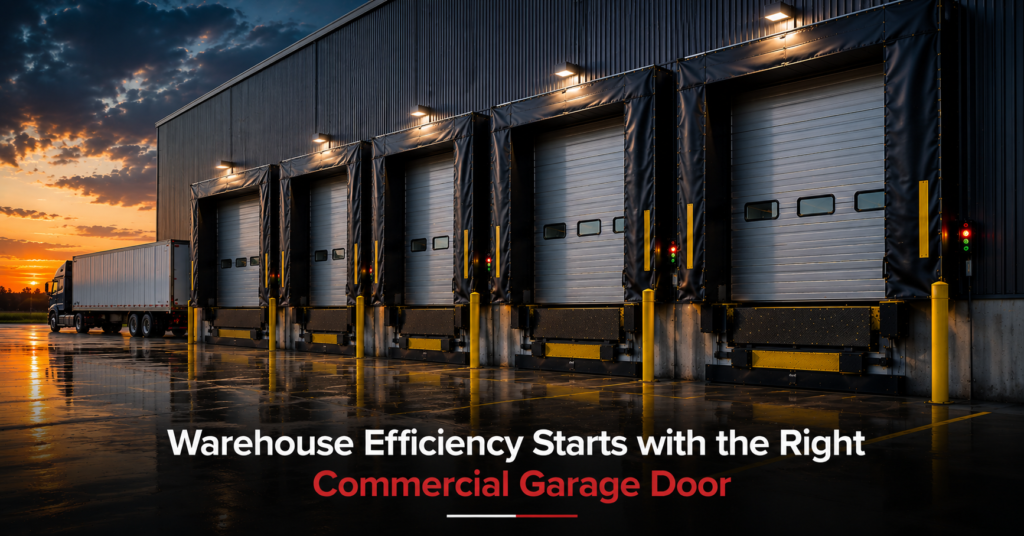
When people think about warehouse efficiency, they usually picture racking systems, forklift routes, or inventory software. The garage door rarely makes the list — until it becomes the reason a shift starts late, a bay sits idle, or a temperature-sensitive shipment gets exposed to outside air for longer than it should.
The truth is, the commercial garage door is one of the most-used pieces of equipment in the entire building. It cycles constantly, controls the flow of people and goods, and directly shapes how smoothly a facility runs. At VP Commercial Garage Doors, we’ve worked with enough warehouses to know that when the door is right, nobody thinks about it. When it’s wrong, everyone notices — usually in the form of delays, safety concerns, or a maintenance call at the worst possible time.
The Garage Door Is a Bigger Factor in Efficiency Than Most Facilities Realize
A commercial garage door isn’t just an entry point. It controls access, regulates internal climate, and sets the pace for how quickly people, vehicles, and goods move through a facility. Door speed, alignment, reliability, and how well it integrates with surrounding dock equipment all affect the day-to-day rhythm of operations.
Facilities that were built with lighter-duty or underspecified doors often don’t notice the impact right away. It shows up gradually — more frequent service calls, slower cycle times, or a door that simply can’t keep pace with how often the space is actually being used.
How the Right Door Affects Daily Operations
Door Speed and Cycle Rating
A door that opens and closes quickly reduces the time a bay sits open, keeping traffic moving and limiting how long conditioned air escapes the building. Facilities with high-frequency door use benefit significantly from doors engineered for high-cycle performance rather than standard-duty models that weren’t built for that pace.
Reliable, Predictable Movement
Vehicles and forklifts depend on consistent, predictable door movement to enter and exit safely. A door that hesitates, jerks, or moves unevenly creates uncertainty for drivers and slows down every cycle, even when nothing is technically broken.
Safety Sensors and Controlled Movement
Doors operating around people, vehicles, and equipment need reliable sensors and controlled movement to prevent accidents. Facilities with doors lacking proper safety features tend to see more near-misses, which slows operations even when no one is actually hurt, simply from the caution it introduces into daily routines.
Insulation and Temperature Control
Doors that open frequently or seal poorly allow temperature loss and air infiltration, which affects heating and cooling efficiency throughout the warehouse. Properly insulated and sealed doors help maintain stable interior conditions, which matters both for employee comfort and for protecting temperature-sensitive inventory.
Noise Reduction
In warehouses with frequent cycling, door noise adds up over the course of a shift. Well-built commercial doors operate more quietly, which contributes to a more comfortable working environment, especially in facilities where the dock is close to other work areas.
Choosing the Right Type of Commercial Garage Door
Not every warehouse needs the same door. The right choice depends on how frequently the door cycles, what’s moving through it, and what environmental conditions it needs to manage.
Sectional Steel Doors
Sectional doors are a common choice for loading docks and industrial facilities because they combine strength, insulation options, and durability. They’re well-suited to moderate-to-frequent use and offer a strong baseline for security and weather protection.
High-Speed Doors
For facilities with high dock turnover, high-speed doors are designed to cycle rapidly without sacrificing durability. These doors are especially valuable in high-traffic environments where minimizing open-door time has a direct impact on both energy efficiency and workflow.
Rolling or Roll-Up Doors
Rolling doors are a practical option where space is limited, since they roll up compactly rather than requiring overhead track clearance. They tend to hold up well in facilities with frequent use and varied conditions.
Fire-Rated Doors
In facilities with specific fire code requirements, fire-rated doors add a layer of protection between spaces, which is essential for compliance in certain warehouse layouts and storage configurations.
The Hidden Impact of the Wrong Door
A door that’s undersized or underspecified for how a facility actually operates rarely fails immediately. Instead, it creates ongoing friction: more frequent service calls, slower cycle times, inconsistent temperature control, and a general sense that the dock “just runs a little rough.” Facilities often adjust their expectations around this friction rather than recognizing it as a door that was never matched to the workload in the first place.
Signs Your Current Door Is Holding Efficiency Back
- The door cycles noticeably slower than the pace of your operation requires
- Staff have learned to work around delays instead of reporting them
- Temperature swings near the dock affect comfort or product condition
- Noise from the door has become a regular part of daily complaints
- Service calls for the same door keep recurring
- The door feels unpredictable or inconsistent during entry and exit
If several of these sound familiar, it’s worth evaluating whether the current door actually matches how the facility operates today, rather than how it operated when the door was originally installed.
Sustainability and Energy Efficiency Benefits
Warehouses and distribution centers are significant consumers of energy, which makes the garage door’s role in climate control more important than it might seem. Well-insulated, properly sealed doors reduce the load on HVAC systems by helping maintain stable interior temperatures, which matters most in facilities storing temperature-sensitive goods. For businesses working toward broader sustainability or green building goals, energy-efficient commercial doors can be a meaningful part of that effort.
Common Mistakes When Selecting or Maintaining a Warehouse Door
Choosing a door based on appearance rather than usage patterns. A door that looks fine but isn’t rated for the facility’s actual cycle frequency will underperform regardless of how it looks.
Ignoring insulation until energy issues become obvious. By the time drafts or temperature swings are noticeable, the inefficiency has likely been present for a while.
Ignoring integration with dock equipment. A high-performing door paired with an outdated leveler or missing seals still leaves gaps in overall efficiency.
Treating the door as installed-and-forgotten. Even well-built commercial doors require regular maintenance to keep performing at the level they were designed for.
Why Working With a Commercial Specialist Matters
Choosing and maintaining the right commercial garage door isn’t just about picking a model — it’s about matching the door to how your facility actually operates. VP Commercial Garage Doors works with warehouses and distribution centers to evaluate current door performance, recommend the right type and specification for the workload, and keep that equipment running reliably over time.
Where We Help Warehouses Improve Efficiency With the Right Door
We work with facilities throughout the Chicagoland area, including Deerfield, Villa Park, Wood Dale, and Addison, along with many surrounding communities. Wherever your warehouse is located, our team can assess your current door setup and help you determine whether it’s actually keeping pace with your operation.
FAQs About Commercial Garage Doors and Warehouse Efficiency
How much of a difference does door speed really make?
For high-traffic docks, faster cycle times reduce how long a bay sits open, which directly affects energy loss and how quickly trailers can be processed.
Is insulation really necessary for a warehouse garage door?
Yes, especially for facilities storing temperature-sensitive goods or dealing with seasonal extremes. Insulated doors help stabilize interior conditions and reduce strain on HVAC systems.
How do I know if my current door is undersized for my operation?
Frequent service calls, slower-than-expected cycle times, and staff workarounds are common signs that a door isn’t matched to current usage levels.
Do high-speed doors require more maintenance than standard doors?
Not necessarily, but they do require maintenance from technicians familiar with their specific mechanisms, since they operate differently than standard sectional doors.
Can upgrading a warehouse door really support sustainability goals?
Yes. Improved insulation and sealing reduce energy loss, which contributes to broader efficiency and sustainability efforts across a facility.
Contact VP Commercial Garage Doors
If your business needs dependable Commercial Garage Door Repair, Commercial Overhead Door Installation, Commercial Garage Door Maintenance, Rolling Steel Door Repair, High-Speed Commercial Doors, Dock Leveler Repair, Loading Dock Equipment Service, or Emergency Commercial Garage Door Repair, trust the experienced team at VP Commercial Garage Doors.
We proudly serve businesses throughout Elk Grove Village, Schaumburg, Naperville, Aurora, Buffalo Grove, Addison, Franklin Park, Palatine, Wheeling, Oak Brook, and surrounding Illinois communities.
Phone: 847 380 6448
Website: https://vpcommercialgaragedoors.com/
Call VP Commercial Garage Doors today to schedule professional commercial garage door service and keep your warehouse or industrial facility operating safely, efficiently, and without costly interruptions.
Final Thoughts
Warehouse efficiency is usually discussed in terms of layout, staffing, and technology — but the commercial garage door plays just as significant a role, even if it’s easy to overlook. A door that’s properly matched to how a facility actually operates keeps traffic moving, protects internal conditions, and fades into the background the way good equipment should.
If your current door has been creating friction instead of supporting your operation, it’s worth having it evaluated against how your warehouse actually runs today.
Summary
Warehouse efficiency depends heavily on having the right commercial garage door — one matched to cycle frequency, insulation needs, and daily traffic patterns. Door speed, reliability, insulation, and safety sensors all directly affect workflow, energy use, and safety, making door selection and maintenance a key part of overall warehouse performance.