

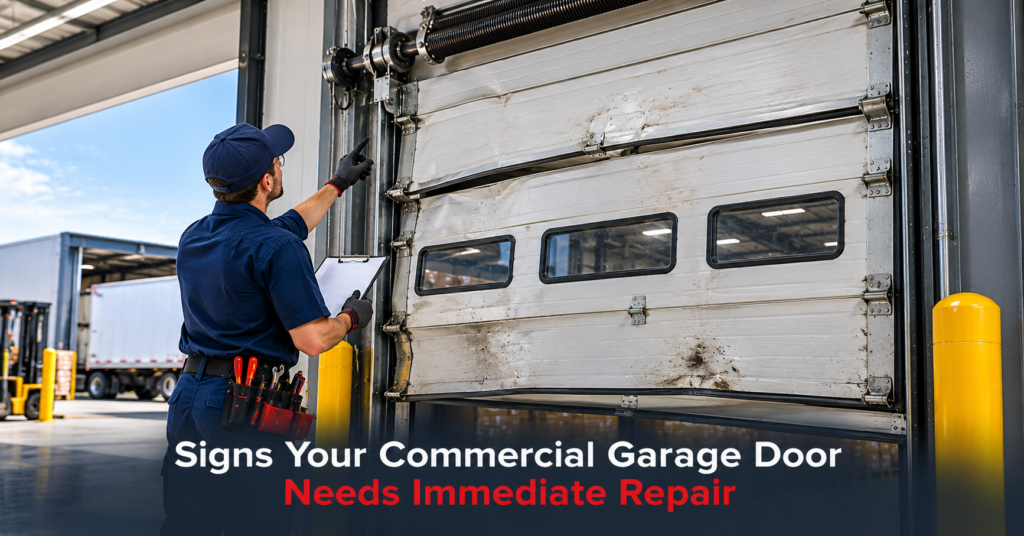
A commercial garage door rarely fails without warning. Most breakdowns start small — a strange noise, a slight hesitation, a door that doesn’t sit quite right — before turning into a door that won’t open at all. Knowing the early commercial garage door repair signs can be the difference between a quick fix and a full shutdown of your loading area. At VP Commercial Garage Doors, we see the same warning signs come up again and again right before an emergency call, so this guide walks through what to watch for and when to act.
Why Catching Problems Early Matters
A commercial door isn’t just an entry point — it’s often central to daily operations. When it stops working, deliveries stall, equipment can’t move, and employees may be stuck waiting instead of working.
Spotting trouble early helps you:
- Avoid a complete door failure during business hours
- Reduce safety risks for staff and drivers
- Prevent small issues from turning into bigger, more involved repairs
- Keep operations running without unplanned downtime
Warning Signs Your Commercial Garage Door Needs Repair
1. Unusual Noises During Operation
A door that grinds, squeals, bangs, or rattles is telling you something. Grinding often points to worn rollers or a misaligned track. Banging can mean loose hardware or a spring issue. If the sound is new or getting louder, it’s worth a closer look before it leads to a bigger breakdown.
2. Slow or Uneven Movement
A door that used to open smoothly but now moves in jerks, pauses mid-cycle, or takes noticeably longer than usual is showing signs of strain — often in the opener, springs, or track alignment.
3. The Door Won’t Stay Open or Closed
If the door drifts down on its own after opening, or won’t fully seat when closing, this usually points to a garage door spring repair need. Springs carry the door’s weight, and when they weaken, the door can’t hold its position properly.
4. Visible Gaps or Misalignment
Gaps along the sides, bottom, or top of the door let in drafts, dust, and moisture — and often signal the door isn’t sitting correctly on the track. Left unaddressed, this can lead to further misalignment and strain on other components.
5. Sagging or Off-Track Panels
If sections of the door look bent, bowed, or visibly out of line with the rest of the panels, the door may be partially off its track. This is a safety concern as well as a functional one, since an off-track door can come down unexpectedly.
6. Slow Response from the Opener
An opener that hesitates, requires multiple button presses, or stops mid-cycle is often struggling with worn gears, a failing motor, or electrical issues. A garage door opener repair visit can usually resolve this before the opener fails completely.
7. Sensors Not Responding Properly
If the door doesn’t reverse when something is in its path, or the safety sensors seem inconsistent, this needs immediate attention. Malfunctioning sensors are a direct safety risk, especially in facilities with regular forklift or pedestrian traffic near the door.
8. Rust, Cracks, or Visible Wear on Panels
Surface rust, cracked seams, or dented panels aren’t just cosmetic. They can weaken the door’s structure over time and may require commercial garage door panel repair before the damage spreads to neighboring sections.
9. Increased Energy Costs or Drafts Inside
If the space behind the door feels drafty or temperatures are harder to maintain, worn seals or gaps around the door frame are often the cause. This is especially noticeable during Illinois winters.
10. The Door Won’t Open at All
This is the clearest sign of all — and usually means a technician visit is needed right away. A door stuck in the closed position can halt deliveries, block equipment, and leave a facility without secure access.
What to Do When You Notice These Signs
- Stop using the door if it seems unsafe. A door that’s grinding, off-track, or not responding to sensors shouldn’t be operated until it’s checked.
- Note when the issue started and how it’s changed. This helps a technician diagnose the problem faster.
- Avoid DIY fixes on springs, cables, or openers. These components carry high tension and are best left to trained professionals.
- Schedule a repair visit promptly. Small issues tend to get more expensive and more disruptive the longer they’re left alone.
Common Mistakes Businesses Make
- Ignoring minor noises. A small grinding sound today can mean a stuck door tomorrow.
- Assuming the opener is always the problem. Many issues start in the springs, tracks, or rollers, not the motor.
- Waiting for a slow period to schedule repairs. Problems rarely wait for a convenient time, and delays increase risk.
- Overlooking safety sensor issues. These are often dismissed as minor glitches when they’re actually a real safety concern.
- Letting staff attempt repairs themselves. Without the right tools and training, this can lead to injury or further damage.
Expert Tips for Staying Ahead of Repairs
- Encourage staff to report unusual sounds or door behavior right away, rather than waiting to see if it goes away
- Keep a simple log of any door issues to help spot recurring patterns
- Schedule a commercial garage door inspection on a regular basis rather than waiting for a visible problem
- Pair ongoing care with a preventive maintenance plan to catch wear before it becomes a breakdown
- Don’t delay repairs on safety-related components like sensors, cables, or springs
When to Call a Professional Right Away
Some situations call for immediate attention rather than a scheduled visit:
- The door won’t open or close at all
- A cable or spring has visibly snapped
- The door is off its track or visibly sagging
- Safety sensors aren’t reversing the door properly
- You hear a loud bang followed by the door not functioning
In any of these cases, it’s safer to stop using the door and call for service rather than trying to force it to work.
Local Support for Chicagoland Businesses
VP Commercial Garage Doors provides prompt repair service for businesses in Bolingbrook, Carol Stream, Bartlett, and Crystal Lake, along with surrounding communities. Our technicians are familiar with how daily use and seasonal weather affect commercial doors across the area, so repairs are handled efficiently and correctly the first time. If a door is showing repeated issues, we can also discuss whether commercial garage door installation makes more sense long-term.
FAQs
How quickly should a commercial garage door repair be scheduled?
As soon as warning signs appear. Waiting often turns a manageable repair into a more disruptive breakdown.
Can a noisy garage door still be safe to use?
It depends on the cause. Some noises are minor, but grinding, banging, or sounds tied to the springs or cables should be checked before continued use.
What’s the most common reason commercial doors stop opening?
Spring failure and opener issues are among the most frequent causes, though track misalignment can also be responsible.
Is it safe to operate a door with inconsistent safety sensors?
No. Sensors that aren’t working properly should be repaired immediately, since they’re designed to prevent injuries and equipment damage.
How can I tell if it’s a repair issue or a sign I need a new door?
Frequent, repeated problems on an older door often point toward replacement being the more practical long-term option.
Contact VP Commercial Garage Doors
If your business needs dependable Commercial Garage Door Repair, Commercial Overhead Door Installation, Commercial Garage Door Maintenance, Rolling Steel Door Repair, High-Speed Commercial Doors, Dock Leveler Repair, Loading Dock Equipment Service, or Emergency Commercial Garage Door Repair, trust the experienced team at VP Commercial Garage Doors.
We proudly serve businesses throughout Elk Grove Village, Schaumburg, Naperville, Aurora, Buffalo Grove, Addison, Franklin Park, Palatine, Wheeling, Oak Brook, and surrounding Illinois communities.
Phone: 847 380 6448
Website: VP Commercial Garage Doors
Call VP Commercial Garage Doors today to schedule professional commercial garage door service and keep your warehouse or industrial facility operating safely, efficiently, and without costly interruptions.
Conclusion
A commercial garage door usually gives clear signals before it fails completely — unusual noises, slow movement, visible gaps, or an opener that struggles to keep up. Catching these signs early and scheduling repair promptly helps avoid unplanned downtime and keeps your facility running safely. When something feels off, it’s always worth having a professional take a closer look before the issue grows into something bigger.
Summary
Common signs a commercial garage door needs immediate repair include unusual noises, slow or uneven movement, visible gaps, sagging panels, and an opener that hesitates or stops working. Addressing these signs early prevents complete door failure and keeps business operations running smoothly and safely.