

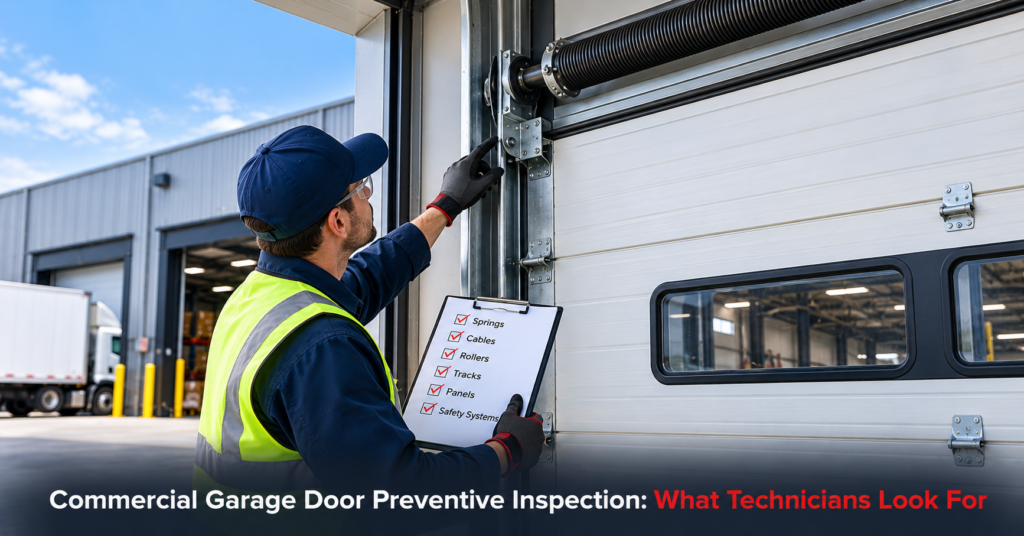
Most commercial garage doors don’t fail without warning. A slightly slow close, a new rattle, or a small gap at the edge is usually the first sign that something is wearing down. A regular commercial garage door inspection catches these small problems before they turn into a stuck door or a safety hazard. At VP Commercial Garage Doors, our technicians follow a step-by-step process on every visit, and this guide walks you through what they check and why each item matters.
What Is a Preventive Inspection?
A preventive inspection is a scheduled, hands-on check of your door and all its moving parts. It happens before anything breaks, not after.
Unlike an emergency call, the goal is to spot wear early. The technician tests how the door performs, looks closely at each component, and makes small adjustments on the spot. Anything that needs attention is flagged so you can plan repairs on your own timeline.
Why Preventive Inspections Matter for Commercial Doors
Commercial doors work much harder than residential ones. A loading dock door may cycle dozens of times a day, and every cycle adds stress to springs, cables, rollers, and the opener.
Regular inspections help you:
- Keep employees, drivers, and visitors safe around moving doors
- Avoid unexpected downtime at loading docks and entry points
- Extend the service life of the door and its parts
- Catch hidden problems that aren’t visible from the floor
- Keep the door operating smoothly and quietly
What Technicians Look For During a Commercial Garage Door Inspection
1. Springs and Counterbalance System
Springs carry the full weight of the door, so they get top priority. Technicians check for gaps in the coils, rust, stretching, and uneven tension.
They also run a balance test by disconnecting the opener and lifting the door by hand. A properly balanced door stays in place at the halfway point. If it drops or floats up, the springs need attention. Any sign of wear usually means garage door spring repair should be scheduled soon, since spring failure is one of the most common reasons a door stops working.
2. Cables and Drums
Lift cables work with the springs to raise and lower the door. Technicians look for fraying, broken strands, rust, and loose connections at the drums. A worn cable can snap under load, so this is a check that should never be skipped.
3. Rollers, Hinges, and Hardware
Rollers guide the door along the track, and hinges hold the panels together. Technicians look for:
- Worn, cracked, or flat-spotted rollers
- Loose or bent hinges
- Missing or loose bolts and fasteners
- Signs of metal fatigue near high-stress points
Loose hardware is easy to fix during an inspection but can lead to bigger problems if ignored.
4. Tracks and Alignment
Tracks must be straight, secure, and properly aligned. Technicians check for dents, gaps, loose brackets, and rust. Even a small bend can cause the door to bind, shake, or jump off track over time.
5. Door Panels and Sections
Panels are checked for dents, cracks, warping, and rust along the edges. Minor issues can often be handled with garage door panel repair, while heavily damaged sections may need to be replaced. Technicians also check the joints between sections to make sure they sit flush.
6. Seals and Weatherstripping
Bottom, side, and top garage door seals are inspected for cracks, gaps, and flattening. Worn seals let in dust, drafts, moisture, and pests, so replacing them early helps keep the building envelope tight.
7. Opener and Motor Operation
The opener is tested for smooth starts, steady travel, and quiet operation. Technicians listen for grinding or straining sounds and check the chain, belt, or drive system. They also review limit settings and force settings so the door stops correctly at both ends. If the motor shows signs of trouble, garage door opener repair may be recommended.
8. Safety Sensors and Reversal Features
Photo-eye sensors and auto-reverse systems protect people and equipment. Technicians confirm that:
- Sensors are clean, aligned, and responding
- The door reverses when an obstruction is detected
- Edge sensors or safety devices are working properly
This is one of the most important parts of the inspection in busy work areas.
9. Wiring, Controls, and Access Devices
Wall buttons, remotes, keypads, and control panels are tested for reliable response. Technicians also check exposed wiring for damage and make sure connections are secure.
10. Lubrication and Final Adjustments
Finally, moving parts such as rollers, hinges, and springs are lubricated with the right products for commercial doors. The technician then runs the door through several full cycles to confirm everything works smoothly after adjustments.
How Often Should a Commercial Door Be Inspected?
The right schedule depends on how heavily the door is used:
- High-traffic doors (loading docks, distribution centers): more frequent checks throughout the year
- Moderate-use doors (retail receiving, service bays): at least twice a year
- Low-use doors (storage or backup entrances): at least once a year
Illinois weather adds another reason to keep a seasonal routine. Freezing temperatures, snow, and humidity can affect springs, seals, and lubricants, so many facilities schedule one visit before winter and one in spring.
Warning Signs You Shouldn’t Wait for a Scheduled Inspection
Call a technician sooner if you notice:
- Unusual grinding, squealing, or banging sounds
- The door moving unevenly or shaking
- A door that closes too fast or won’t stay open
- Visible gaps, sagging, or bent tracks
- The opener straining or stopping mid-cycle
- Sensors that respond inconsistently
Common Mistakes Facilities Make
- Waiting until something breaks. Small issues are much easier to address when found early.
- Attempting DIY spring or cable work. These parts hold high tension and should only be handled by trained technicians.
- Only checking the opener. Many door problems start in the springs, tracks, or hardware, not the motor.
- Skipping the sensors. Safety features can drift out of alignment without anyone noticing.
- Using the wrong lubricant. Products not designed for garage door parts can attract dust and cause buildup.
- Ignoring small changes in sound or movement. Your team uses the door every day, so their observations are valuable.
Expert Tips for Getting the Most from Every Inspection
- Ask your technician to show you what they find, so you understand each issue
- Keep a simple log of inspection dates and any parts replaced
- Train staff to report unusual noises or door behavior right away
- Keep the area around the door clear of stored items and debris
- Pair inspections with a preventive maintenance plan for consistent, year-round care
- Schedule inspections during slower business hours to avoid interrupting operations
Local Service for Chicagoland Facilities
VP Commercial Garage Doors provides on-site inspection and commercial garage door repair for businesses in Palatine, Skokie, Des Plaines, and Wheaton, along with nearby communities. Our technicians know how local weather and heavy business use affect commercial doors, so recommendations are practical and matched to how your facility actually operates. If an inspection shows a door is nearing the end of its service life, we can also discuss commercial garage door installation options.
FAQs
How long does a commercial garage door inspection take?
Most inspections take a short visit, though the time depends on the number of doors and their condition.
Can an inspection be done without shutting down operations?
Often, yes. Technicians can work around your schedule and inspect one door at a time to limit disruption.
What’s the difference between an inspection and a repair visit?
An inspection is a proactive check to find early wear. A repair visit fixes a specific problem that has already appeared.
Do inspections cover the opener too?
Yes. A thorough inspection includes the opener, controls, and safety sensors along with the door itself.
Can staff perform any of these checks themselves?
Staff can do simple visual checks, like listening for noises and looking for gaps. Springs, cables, and hardware under tension should be handled by professionals.
Contact VP Commercial Garage Doors
If your business needs dependable Commercial Garage Door Repair, Commercial Overhead Door Installation, Commercial Garage Door Maintenance, Rolling Steel Door Repair, High-Speed Commercial Doors, Dock Leveler Repair, Loading Dock Equipment Service, or Emergency Commercial Garage Door Repair, trust the experienced team at VP Commercial Garage Doors.
We proudly serve businesses throughout Elk Grove Village, Schaumburg, Naperville, Aurora, Buffalo Grove, Addison, Franklin Park, Palatine, Wheeling, Oak Brook, and surrounding Illinois communities.
Phone: 847 380 6448
Website: VP Commercial Garage Doors
Call VP Commercial Garage Doors today to schedule professional commercial garage door service and keep your warehouse or industrial facility operating safely, efficiently, and without costly interruptions.
Conclusion
A commercial garage door has dozens of moving parts working together, and each one wears at its own pace. A regular preventive inspection looks at springs, cables, tracks, panels, seals, openers, and safety sensors as one system, so small issues get fixed before they grow. Whether your facility runs a single door or a full row of dock doors, a routine inspection helps keep people safe, operations moving, and your doors performing reliably year after year.
Summary
A commercial garage door preventive inspection checks springs, cables, rollers, tracks, panels, seals, the opener, and safety sensors for wear before failure occurs. Technicians also test balance, lubricate moving parts, and confirm proper operation. Regular inspections improve safety, reduce unexpected downtime, and extend the door’s service life.