

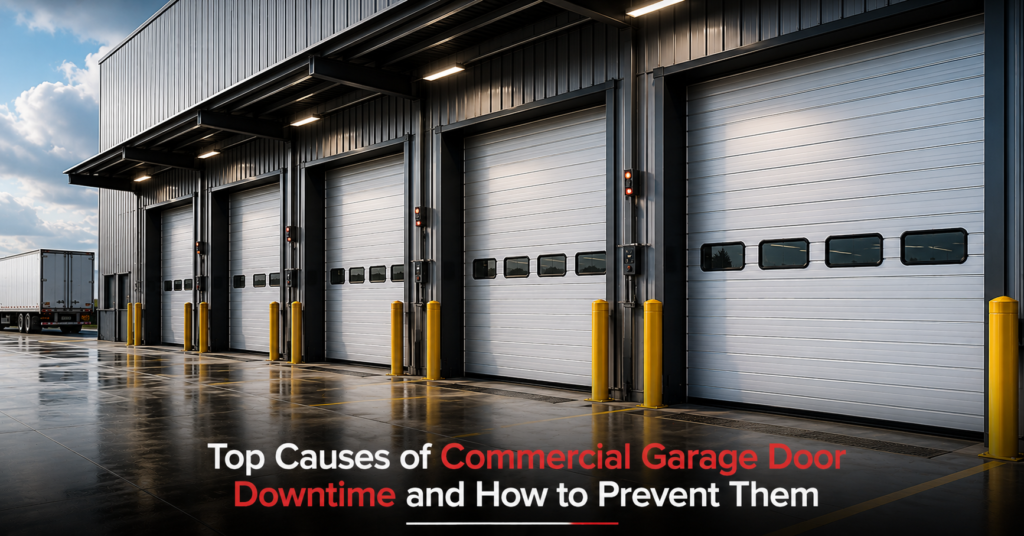
A stuck or broken commercial garage door doesn’t just sit there quietly. It stops trucks from loading, pulls staff away from other tasks, and turns a normal day into a scramble to work around a bay that’s suddenly out of commission. For a facility that depends on steady door operation, downtime isn’t a minor inconvenience — it’s a direct hit to how smoothly the entire operation runs.
The good news is that most downtime doesn’t happen without warning. At VP Commercial Garage Doors, we consistently find that the doors causing the most disruption were showing signs of trouble well before they actually failed. This guide breaks down the most common causes of commercial garage door downtime and exactly what prevents each one.
Why Downtime Is a Bigger Issue Than It Seems
A single door failure rarely stays isolated. It affects loading schedules, forces staff to reroute traffic to other bays, and in high-traffic facilities, can create a bottleneck that takes hours to fully clear even after the door itself is fixed. Because commercial doors cycle so frequently — often dozens or hundreds of times a day — small issues develop faster and compound quicker than they would on a residential door.
Cause #1: Broken or Worn Springs
Torsion springs carry the bulk of a commercial door’s weight, and they operate under enormous, constant tension. When a spring fails, the door typically stops working immediately, with no gradual warning.
Prevention: Routine spring inspections catch fatigue and corrosion before a spring reaches the point of sudden failure. This is one of the clearest reasons commercial garage door maintenance should happen on a set schedule, not just when something feels off.
Cause #2: Misaligned or Damaged Tracks
Tracks guide the door through every cycle, and even a small shift in alignment can cause binding, jerking, or a door that comes off its track entirely. This often happens gradually, through vibration and daily wear, or suddenly, from an impact.
Prevention: Regular visual inspection of tracks, along with prompt attention after any visible impact, prevents minor misalignment from turning into a door that’s stuck or unsafe to operate.
Cause #3: Worn Rollers and Bearings
Rollers and bearings keep the door moving smoothly along the track. As they wear down, movement becomes rougher, noisier, and less predictable, which puts additional strain on surrounding components.
Prevention: Replacing worn rollers before they fail completely is far simpler than dealing with the uneven movement and additional strain they cause once they’ve deteriorated. This connects closely to overall door balance, since worn rollers often throw off how evenly the door travels.
Cause #4: Opener and Electrical Failures
Operator issues — from tripped breakers and loose wiring to control board failures — are among the most common reasons a door stops responding altogether. These issues can appear suddenly, even on a door that seemed to be working fine the day before.
Prevention: Periodic testing of the opener, wiring, and backup power systems catches many of these issues before they cause a full shutdown, especially in facilities where a power interruption would otherwise leave a bay completely inoperable.
Cause #5: Frayed or Broken Cables
Cables work alongside the springs to manage the door’s weight, and like springs, they wear down under constant tension. A frayed or snapped cable can cause the door to hang unevenly or stop functioning altogether.
Prevention: Cable condition should be checked during every professional inspection, since visible fraying is often an early warning sign that’s easy to miss during a quick glance.
Cause #6: Insufficient or Incorrect Lubrication
Rollers, hinges, and springs all rely on proper lubrication to move smoothly. Without it, friction increases with every cycle, accelerating wear across the entire system.
Prevention: A consistent lubrication routine using the correct silicone or lithium-based product keeps friction low and extends the life of nearly every moving part on the door.
Cause #7: Weather and Environmental Exposure
Heavy daily use combined with seasonal weather extremes is one of the most common reasons commercial doors experience recurring issues. Cold temperatures make springs more brittle, while humidity and temperature swings affect seals and hardware over time.
Prevention: Seasonal inspections, particularly ahead of winter, help components handle weather-related stress instead of absorbing it unprepared.
Cause #8: Impact Damage From Vehicles or Forklifts
A bumper tap or forklift graze can shift a track, dent a panel, or damage hardware in ways that aren’t always obvious right away. Left unaddressed, this kind of damage tends to worsen with continued use.
Prevention: Any visible impact should trigger a professional inspection, even if the door still seems to operate normally afterward.
Cause #9: Delayed or Skipped Maintenance
This is the cause that ties all the others together. Facilities that postpone inspections or ignore early warning signs — new noises, slower movement, minor resistance — consistently experience more downtime than facilities that address issues as they appear.
Prevention: A scheduled preventive maintenance plan, rather than reactive repairs alone, is the single most effective way to reduce unplanned downtime across the board.
Building a Downtime Prevention Plan
- Schedule routine professional inspections rather than waiting for a visible failure
- Address unusual noises, resistance, or slow movement as soon as they’re noticed
- Keep a maintenance log to track recurring issues and service history
- Train staff to report problems immediately instead of working around them
- Inspect tracks and panels after any impact, even minor ones
- Plan seasonal checks ahead of extreme weather
Why Working With a Commercial Specialist Matters
Preventing downtime takes more than good intentions — it takes a maintenance routine built around how your facility actually operates. VP Commercial Garage Doors works with warehouses, distribution centers, and industrial facilities to catch these issues early, so a bay stays in service instead of becoming the reason operations grind to a halt.
Where We Help Businesses Reduce Downtime
We work with facilities throughout the Chicagoland area, including Franklin Park, Melrose Park, Bensenville, and Oak Brook, along with many surrounding communities. Wherever your facility is located, our team can help you build a maintenance plan that keeps your doors running reliably.
FAQs About Commercial Garage Door Downtime
What’s the most common cause of unexpected commercial garage door downtime?
Broken or worn springs are among the most common causes, since they carry significant tension and often fail suddenly rather than gradually.
Can weather really affect how often a commercial door needs repairs?
Yes. Cold temperatures make springs more brittle, and seasonal humidity affects seals and hardware, making weather a significant factor in recurring issues.
How often should a commercial garage door be inspected to prevent downtime?
Routine inspections should happen on a regular schedule, with additional checks after any noticeable change in performance or visible impact.
Is it possible to prevent all commercial garage door downtime?
Not entirely, but a consistent maintenance routine significantly reduces the frequency and severity of unexpected failures compared to a reactive approach.
Should minor noises or slow movement be reported right away?
Yes. These are often the earliest warning signs of a developing issue, and addressing them early is one of the simplest ways to prevent a full breakdown.
Contact VP Commercial Garage Doors
If your business needs dependable Commercial Garage Door Repair, Commercial Overhead Door Installation, Commercial Garage Door Maintenance, Rolling Steel Door Repair, High-Speed Commercial Doors, Dock Leveler Repair, Loading Dock Equipment Service, or Emergency Commercial Garage Door Repair, trust the experienced team at VP Commercial Garage Doors.
We proudly serve businesses throughout Elk Grove Village, Schaumburg, Naperville, Aurora, Buffalo Grove, Addison, Franklin Park, Palatine, Wheeling, Oak Brook, and surrounding Illinois communities.
Phone: 847 380 6448
Website: https://vpcommercialgaragedoors.com/
Call VP Commercial Garage Doors today to schedule professional commercial garage door service and keep your warehouse or industrial facility operating safely, efficiently, and without costly interruptions.
Final Thoughts
Commercial garage door downtime almost always has a traceable cause — a worn spring, a misaligned track, a skipped inspection. The facilities that experience the least disruption aren’t the ones with newer doors; they’re the ones that catch these issues early and address them consistently.
If your facility has dealt with recurring door issues, it’s worth stepping back and identifying which of these causes might be behind it, before the next failure catches you off guard.
Summary
Top causes of commercial garage door downtime include worn springs, misaligned tracks, worn rollers, opener or electrical failures, frayed cables, poor lubrication, weather exposure, impact damage, and delayed maintenance. Preventing downtime relies on routine inspections, prompt repairs, and a consistent preventive maintenance schedule.