

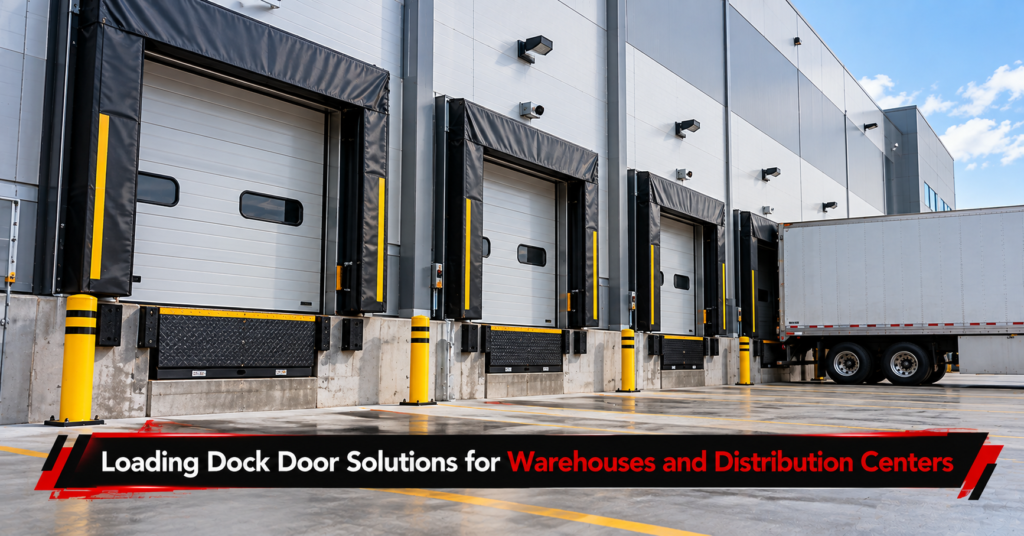
In a warehouse or distribution center, the loading dock is where the day’s work either flows or stalls. Trucks arrive on schedule, pallets move in and out, and every delay at the door ripples through the rest of the operation. The right loading dock door solutions keep that flow steady, protect your inventory, and keep your team safe. At VP Commercial Garage Doors, we help warehouse and logistics facilities choose, install, and maintain dock doors built for constant use. This guide covers your options and what to look for.
Why Loading Dock Doors Need Special Attention
A dock door is not like any other door in your building. It may cycle dozens or even hundreds of times a day, and it sits right where trucks, forklifts, and people all meet.
That means dock doors deal with:
- Heavy, repeated opening and closing
- Frequent impact from vehicles and equipment
- Exposure to rain, snow, wind, and dust
- Strict safety demands around moving traffic
- Pressure to stay open and working at all times
Because of this, a door that works fine for a storage room may fail quickly at a dock. Matching the door to the job is the first step.
Types of Loading Dock Door Solutions
Sectional Dock Doors
Sectional doors are made of hinged horizontal panels that travel up a track and rest overhead. They are the most common choice for loading docks.
They work well because they:
- Offer insulated panel options for temperature control
- Come in many sizes to fit different dock openings
- Can include windows for visibility and natural light
- Run smoothly when properly maintained
For facilities that need steady climate control, insulated sectional doors are often the practical pick.
Rolling Steel Dock Doors
Rolling steel doors coil upward into a compact drum above the opening. They need very little overhead room and are known for strength and security.
They suit facilities that:
- Have limited ceiling clearance
- Need added resistance to forced entry
- Want a tough door for harsh, high-traffic conditions
High-Speed Doors
For busy docks where every second counts, high-speed doors open and close much faster than standard doors. Faster movement means less exposure to outside air and quicker truck turnaround.
They are especially useful in facilities that move a lot of product throughout the day or need to limit dust and temperature swings between the dock and the interior.
Insulated vs. Non-Insulated Doors
Insulated doors help hold steady temperatures, which matters for food storage, pharmaceuticals, and any climate-sensitive goods. Non-insulated doors are lighter and simpler, and they can be a fit for dry storage where temperature is less of a concern.
Key Factors When Choosing a Dock Door
1. Daily Cycle Count
How often will the door open and close? A door used a few times a day has very different needs than one cycling constantly across several shifts. High-cycle docks need heavy-duty springs, strong hardware, and a commercial-grade opener rated for continuous use.
2. Climate and Temperature Control
If your warehouse stores products that must stay cool or warm, insulation and tight sealing become a top priority. Illinois winters and humid summers both put stress on a building’s envelope, so the door should be able to handle both.
3. Security Needs
Loading docks are a common point of unauthorized access. Door material, locking options, and access controls all play a role. Rolling steel and reinforced sectional doors give added protection when security is a concern.
4. Space and Layout
Ceiling height, side room, and the way trucks approach the dock all affect which door fits. A quick site review can prevent installation surprises later.
5. Safety Features
Look for photo-eye sensors, auto-reverse systems, and edge sensors that stop the door if something is in its path. These features matter most where forklifts and workers share the same space.
The Role of Seals and Weatherproofing
A dock door is only as effective as the seal around it. Gaps let in dust, drafts, moisture, and pests, all of which can affect stored goods and indoor conditions.
Quality garage door seals along the bottom, sides, and top help keep the interior stable. Because dock doors cycle so often, seals wear out faster than on a standard door. Checking them regularly keeps small gaps from becoming bigger problems.
Common Loading Dock Door Problems
Busy docks tend to show the same issues again and again:
- Worn or broken springs from high cycle counts, often needing prompt garage door spring repair
- Bent tracks and damaged panels from vehicle contact
- Opener strain or failure from near-constant use, which may call for garage door opener repair
- Misaligned sensors that stop working correctly after a bump
- Worn seals that let in air, dust, and moisture
- Slow or uneven movement from worn rollers and hardware
Catching these early keeps your dock running and keeps people safe.
Common Mistakes Warehouses Make
- Choosing a door built for light use. A standard door at a busy dock will wear out far sooner than a heavy-duty one.
- Underestimating cycle counts. Doors often get used more than planned once operations ramp up.
- Ignoring impact protection. Without bollards or guards, tracks and panels take repeated hits.
- Skipping routine maintenance. Small issues pile up quickly at a high-use dock.
- Overlooking sensor checks. Safety devices can drift out of alignment without anyone noticing.
- Waiting for a total breakdown. A door that fails mid-shift can hold up trucks, crews, and shipments.
Expert Tips for Keeping Your Dock Running
- Choose components rated for your actual daily cycle count, not just average use
- Add protective bollards or guards near door tracks and edges
- Schedule a regular commercial garage door inspection so wear is caught early
- Set up a preventive maintenance plan that matches how hard your doors work
- Train drivers and forklift operators to keep safe distances from door edges
- Ask staff to report new noises or movement changes right away
- Keep a log of repairs and replacements to spot recurring patterns
- Keep common wear parts, like rollers and seals, on hand for quick swaps
Dock Door Support Across the Chicagoland Area
Warehouses and distribution centers throughout the region depend on reliable dock doors. VP Commercial Garage Doors serves facilities in Franklin Park, Itasca, Rosemont, and Schiller Park, areas known for strong logistics and industrial activity. Our technicians understand how heavy daily use and Illinois weather affect dock doors, and we plan service around your operating schedule to limit disruption. When a door has reached the end of its service life, we also help with commercial garage door installation that fits your dock’s layout and workload.
FAQs
What is the best type of door for a loading dock?
Sectional doors are the most common choice, while rolling steel and high-speed doors suit facilities with limited space, higher security needs, or very frequent use.
How often should loading dock doors be maintained?
High-traffic docks benefit from more frequent professional checks than low-use doors. A maintenance schedule built around your actual cycle count works best.
Do loading dock doors need to be insulated?
Not always. Insulation matters most when the facility stores temperature-sensitive products or needs steady indoor conditions.
Can a dock door be repaired instead of replaced?
Often, yes. Springs, rollers, panels, sensors, and seals can usually be repaired or replaced. A full replacement makes sense when damage is widespread, or problems keep returning.
What safety features should a dock door have?
Photo-eye sensors, auto-reverse, and edge sensors are important, along with proper alignment and regular testing.
Contact VP Commercial Garage Doors
If your business needs dependable Commercial Garage Door Repair, Commercial Overhead Door Installation, Commercial Garage Door Maintenance, Rolling Steel Door Repair, High-Speed Commercial Doors, Dock Leveler Repair, Loading Dock Equipment Service, or Emergency Commercial Garage Door Repair, trust the experienced team at VP Commercial Garage Doors.
We proudly serve businesses throughout Elk Grove Village, Schaumburg, Naperville, Aurora, Buffalo Grove, Addison, Franklin Park, Palatine, Wheeling, Oak Brook, and surrounding Illinois communities.
Phone: 847 380 6448
Website: VP Commercial Garage Doors
Call VP Commercial Garage Doors today to schedule professional commercial garage door service and keep your warehouse or industrial facility operating safely, efficiently, and without costly interruptions.
Conclusion
A loading dock sets the pace for the whole facility, and the door at its center has to keep up. The right choice depends on cycle count, climate needs, security, and space. Sectional, rolling steel, and high-speed doors each solve different challenges, and good seals, strong hardware, and regular upkeep keep them working. With a thoughtful plan and professional support, your dock can stay safe, efficient, and ready for every shipment.
Summary
Loading dock door solutions for warehouses include sectional, rolling steel, and high-speed doors, chosen by cycle count, insulation needs, security, and available space. Strong seals, safety sensors, heavy-duty hardware, and regular inspections keep dock doors reliable, protect inventory, and reduce unexpected downtime.