

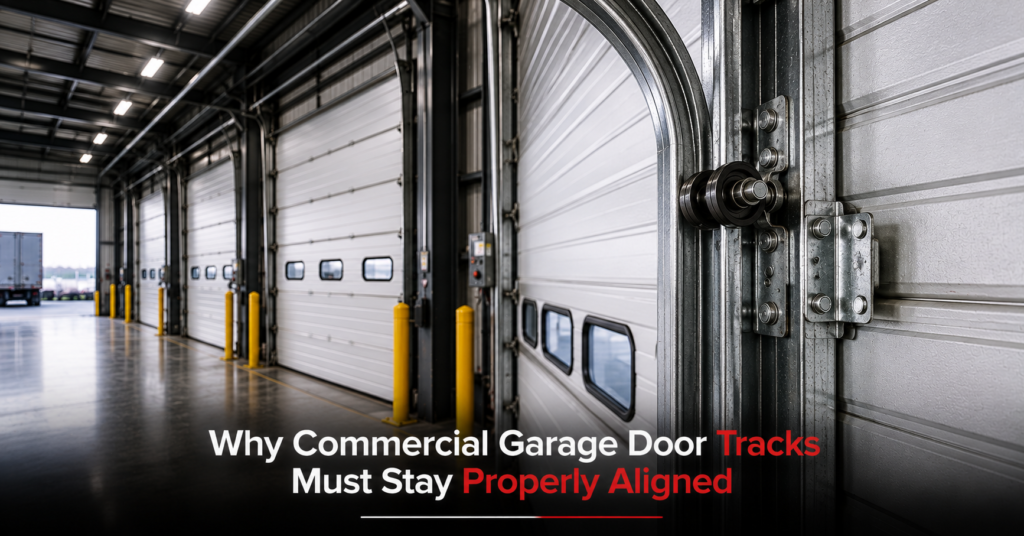
Tracks don’t look like much — just two metal rails running up either side of the door. But they’re doing more work than almost any other component in the system, guiding a heavy, constantly cycling door along a precise path dozens or hundreds of times a day. When that path shifts even slightly, everything downstream of it starts to suffer.
At VP Commercial Garage Doors, track alignment is one of the first things our technicians check, because so many other issues — noisy rollers, opener strain, a door that won’t close all the way — trace directly back to it. This guide covers why alignment matters so much on a commercial door, what throws it off, and what happens when it’s ignored.
What Track Alignment Actually Means
A properly aligned track keeps the door’s rollers running smoothly and consistently along a straight, level path from top to bottom. When both tracks are correctly positioned, the door moves evenly, without binding, dragging, or veering to one side. Even a small shift in that positioning changes how the rollers sit inside the rail, and that small change has ripple effects across the entire door system.
Why Alignment Matters More on Commercial Doors
Commercial doors are heavier, cycle far more frequently, and operate in environments with constant vehicle and forklift traffic. That combination means misalignment develops faster and creates bigger consequences than it would on a lighter, less-used residential door. A commercial door that’s out of alignment isn’t just noisy or inconvenient — it’s a genuine safety concern for everyone working around it.
What Causes Tracks to Fall Out of Alignment
Several factors can throw a commercial door’s tracks out of position over time:
- Constant vibration from daily cycling, which gradually loosens the bolts and brackets holding tracks in place
- Impact damage from a forklift, vehicle, or heavy equipment brushing against the track
- Dirt, debris, and rust buildup inside the track channel, which disrupts smooth roller movement
- Poor original installation, which can leave a door slightly misaligned from day one
- Shifts in the building’s floor or foundation over time, particularly in older facilities
In a high-cycle commercial environment, more than one of these factors is often at play simultaneously, which is part of why alignment issues tend to develop faster than expected.
Signs Tracks Are Out of Alignment
A door that looks crooked or tilted while moving, unusual scraping or grinding noise, visible gaps between the rollers and the track, and a door that hesitates or resists during operation are all common indicators. Many of these signs overlap with worn commercial garage door rollers, since misaligned tracks chew through rollers faster than normal use would — so an inspection often needs to look at both together to find the actual root cause.
The Ripple Effect of Ignoring Misalignment
Track problems rarely stay isolated. As rollers rub against a misaligned rail instead of gliding freely, they wear out faster, and the added friction forces the opener to work harder than it should, accelerating wear on its motor and drive components. This connects closely with overall door balance, since a door that’s dragging unevenly along one side is rarely balanced correctly either. In more serious cases, a badly misaligned track can allow rollers to slip out entirely, risking a section of the door falling — a real hazard given how much a commercial door weighs and how often people and equipment are moving nearby.
How Much Gap Is Normal?
A properly aligned track keeps a fairly consistent, narrow gap between the door panel and the track flange — generally somewhere around half an inch to three-quarters of an inch, depending on the door and track system. Gaps noticeably wider or narrower than that, or gaps that vary from top to bottom, are a sign the track has shifted out of position.
Why Track Correction Should Always Be Left to a Professional
Adjusting a misaligned track means working near a system that’s still under spring tension, on a door that can weigh several hundred pounds. Commercial-grade doors often use heavier track and larger rollers than residential systems, and doors with low-headroom or high-lift configurations require precise, synchronized adjustments that are difficult to get right without training. Attempting to force a bent track back into place or loosening the wrong bracket can cause further damage or create a genuine safety hazard. This is a job for a trained technician, not a general maintenance task.
Protecting Tracks From Impact in a Commercial Setting
Because forklifts and vehicles operate so close to commercial doors, physical protection matters. Barriers, bollards, or clear signage near vulnerable track areas reduce the chances of an accidental impact knocking a track out of position in the first place. This kind of prevention is often more effective than relying on driver caution alone, especially in busy loading areas.
Keeping Tracks Aligned Over Time
- Include a visual track check as part of routine commercial garage door maintenance
- Clear debris and buildup from track channels regularly
- Tighten loosened brackets before minor drift becomes a bigger shift
- Install physical guards near high-traffic areas where impact risk is highest
- Address unusual noise or uneven movement right away rather than waiting
- Have a professional inspect the tracks after any visible impact, even a minor one
Why Working With a Commercial Specialist Matters
Track alignment issues are easy to miss until they’ve already caused wear elsewhere in the system, which is why they deserve close attention during every service visit. VP Commercial Garage Doors evaluates track condition as a standard part of every inspection and repair, catching small shifts before they turn into roller damage, opener strain, or a safety incident.
Where We Help Businesses Keep Their Doors Properly Aligned
We work with facilities throughout the Chicagoland area, including Elmwood Park, Norridge, Northlake, and Pingree Grove, along with many surrounding communities. Wherever your facility is located, our team can inspect your tracks and correct any alignment issues safely and thoroughly.
FAQs About Commercial Garage Door Track Alignment
How often should commercial garage door tracks be inspected?
Tracks should be checked during every routine maintenance visit, with an additional check any time there’s been a visible impact or a noticeable change in how the door moves.
Can a business fix track misalignment without calling a professional?
Minor issues, like clearing debris or tightening an obviously loose bolt, can sometimes be handled internally. Anything involving bent tracks, roller replacement, or adjustments near the springs should go to a trained technician.
What’s the biggest risk of ignoring misaligned tracks?
Beyond noise and wear, the most serious risk is a roller slipping out of the track entirely, which can cause part of the door to fall unexpectedly.
Does track misalignment affect the opener?
Yes. A door dragging against a misaligned track forces the opener to work harder, which accelerates wear on the motor and drive components over time.
Can forklift traffic really affect track alignment?
Yes. Even a minor impact from a forklift or vehicle can shift a track slightly, and repeated small impacts compound into more serious alignment problems over time.
Contact VP Commercial Garage Doors
If your business needs dependable Commercial Garage Door Repair, Commercial Overhead Door Installation, Commercial Garage Door Maintenance, Rolling Steel Door Repair, High-Speed Commercial Doors, Dock Leveler Repair, Loading Dock Equipment Service, or Emergency Commercial Garage Door Repair, trust the experienced team at VP Commercial Garage Doors.
We proudly serve businesses throughout Elk Grove Village, Schaumburg, Naperville, Aurora, Buffalo Grove, Addison, Franklin Park, Palatine, Wheeling, Oak Brook, and surrounding Illinois communities.
Phone: 847 380 6448
Website: https://vpcommercialgaragedoors.com/
Call VP Commercial Garage Doors today to schedule professional commercial garage door service and keep your warehouse or industrial facility operating safely, efficiently, and without costly interruptions.
Final Thoughts
Tracks might be one of the least glamorous parts of a commercial garage door, but they’re central to how safely and smoothly the entire system operates. Catching misalignment early — through routine checks, prompt attention to unusual noise, and protective measures around high-traffic areas — prevents a simple adjustment from turning into worn rollers, a strained opener, or a genuine safety hazard.
If your door has felt off lately, crooked, noisy, or resistant during operation, it’s worth having the tracks checked before the issue grows into something bigger.
Summary
Commercial garage door tracks must stay properly aligned to keep the door moving smoothly, protect rollers and the opener from excess wear, and prevent serious safety hazards like a door falling off track. Misalignment is often caused by vibration, impact damage, or debris, and correction should always be handled by a trained professional.