

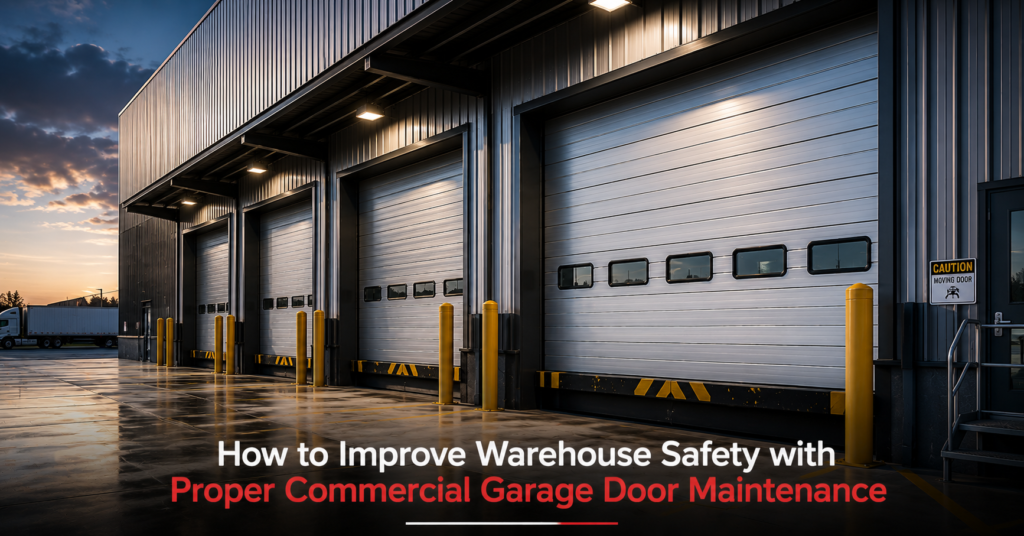
A warehouse door doesn’t look like a safety hazard. It looks like a large, ordinary piece of equipment that opens and closes all day without much thought. But commercial garage doors are heavy, complex systems operating under significant tension, moving constantly around people, vehicles, and equipment. When maintenance gets skipped, that ordinary piece of equipment becomes one of the more serious risk points in the entire facility.
At VP Commercial Garage Doors, safety is the lens we look through first, before efficiency or convenience. A door that’s properly maintained protects the people working around it every single day — and most of what that takes isn’t complicated. It just has to happen consistently.
Why Garage Door Maintenance Is a Safety Issue, Not Just a Convenience One
It’s easy to think of maintenance as something that prevents inconvenient breakdowns. In a warehouse setting, it’s really a safety program. Commercial doors are large, heavy, and operate under spring tension strong enough to cause serious injury if a component fails unexpectedly. National consumer safety data shows that door-related accidents number in the thousands every year, and warehouses and loading docks are consistently among the higher-risk environments, given the frequent vehicle traffic and constant cycling these doors go through.
Most of these incidents share a common thread: a component that was already showing signs of wear before it failed completely. Maintenance is what catches that warning sign before it becomes an accident.
Daily and Weekly Checks Staff Can Handle
Not every safety check requires a technician. Simple, consistent habits from on-site staff catch a surprising number of issues early.
Visual Inspection for Damage and Wear
A quick look at panels, tracks, and visible hardware can catch dents, rust, or misalignment before they affect how the door operates. Frayed cables, bent hinges, and loose bolts are all things a trained eye can spot without any special tools.
Keeping Tracks and Sensors Clear of Debris
Dust, dirt, and warehouse debris can accumulate in tracks and on photo-eye sensors, interfering with smooth operation and, in some cases, preventing the safety system from working correctly. Wiping down sensors and clearing tracks is a small habit that protects both function and safety.
Listening for Unusual Noises
Grinding, popping, or banging sounds are the door’s way of signaling a problem. A noise that’s new or getting louder should never be ignored, since it often points to a component nearing failure.
Monthly and Quarterly Maintenance Tasks
These checks go a step further, examining how the door’s core systems are performing.
Testing Door Balance
Disconnect the opener and manually lift the door about halfway. It should stay in place on its own. If it drifts up or down, the springs are out of balance and need professional adjustment — an unbalanced door puts uneven, unpredictable strain on the entire system.
Lubricating Moving Parts Correctly
Rollers, hinges, springs, and tracks all need regular lubrication with a silicone-based or lithium-based product designed for garage door hardware. Skipping this step increases friction and wear; over-lubricating can attract dirt and create buildup, so consistency matters more than quantity.
Tightening Hardware
Constant cycling gradually loosens bolts, brackets, and screws. Left unchecked, this can eventually cause a door to jostle unpredictably or even come off its track. A routine check with a wrench and screwdriver prevents this from escalating.
Testing Safety Sensors and Auto-Reverse
Photo-eye sensors and the auto-reverse feature are the door’s built-in protection against striking a person or object. Testing these regularly — confirming the door reverses immediately when its path is blocked — is one of the most important safety checks a facility can perform.
Annual Professional Inspections
Some checks require a trained technician with the right tools and experience to perform safely.
Spring and Cable Evaluation
Torsion springs and cables operate under extreme tension and are not safe for untrained staff to adjust. A professional inspection checks for fatigue, corrosion, and early signs of failure that aren’t always visible during a routine walkaround.
Opener and Battery Backup Testing
Commercial-grade openers are built to last for many years with proper maintenance, but belts, chains, and backup batteries wear out well before the opener itself. Testing these components annually helps avoid unexpected failures, especially for facilities relying on battery backup during power outages.
Building a Safety-First Maintenance Routine
Keeping a Maintenance Log
Documenting every inspection, repair, and service visit creates a clear record of a door’s condition over time. This isn’t just good organization — it helps identify recurring problems early and provides documentation that matters during safety audits or insurance reviews.
Training Employees on Safe Door Operation
Even a perfectly maintained door depends on people using it correctly. Staff should know how to operate the door safely, what warning signs to report, and what not to do — like forcing a door that’s sticking or ignoring an obstructed sensor.
Common Warehouse Door Safety Hazards Maintenance Prevents
- Springs or cables failing unexpectedly under tension
- A door dropping or falling due to loosened hardware
- Sensors failing to detect a person or object in the door’s path
- Doors coming off misaligned or damaged tracks
- Battery backup systems failing during a power outage
- Vehicles or forklifts colliding with a door that moves unpredictably
Each of these hazards traces back to a maintenance step that was skipped or delayed.
What Happens When Maintenance Is Skipped
Consider a distribution warehouse with several loading dock doors. One door starts making a loud noise during operation, but with everyone focused on daily tasks, the issue gets pushed aside for a few weeks. Eventually, the torsion spring fails completely — right in the middle of a busy delivery window, when trucks are lined up and workers are relying on that bay to keep moving.
If routine maintenance had caught the spring’s early warning signs, the repair could have happened on a quiet afternoon instead of in the middle of peak activity, with far less risk to anyone standing nearby when it failed.
Why Working With a Commercial Specialist Matters
Warehouse safety depends on more than good intentions — it depends on a maintenance routine that’s actually followed and performed correctly. VP Commercial Garage Doors works with warehouses and distribution centers to build maintenance schedules that fit how the facility actually operates, so safety checks happen consistently rather than only after something goes wrong.
Where We Help Warehouses Stay Safe and Compliant
We work with facilities throughout the Chicagoland area, including Elk Grove Village, Niles, Park Ridge, and Rolling Meadows, along with many surrounding communities. Wherever your facility is located, our team can help you build a maintenance routine that protects your team and keeps your doors running the way they were designed to.
FAQs About Warehouse Safety and Garage Door Maintenance
What’s the most important safety feature to test regularly on a commercial garage door?
The auto-reverse and photo-eye sensor system is one of the most critical features to test, since it’s designed to prevent the door from closing on a person or object.
Can employees perform any of these maintenance checks themselves?
Yes. Visual inspections, listening for noise, and keeping tracks and sensors clean can all be done by trained staff. Spring and cable adjustments should always be left to a professional.
How does a maintenance log actually improve safety?
It creates a documented history of the door’s condition, making it easier to spot recurring issues early and demonstrating due diligence during safety audits or inspections.
Is warehouse door maintenance really a safety issue, or mainly about avoiding breakdowns?
Both, but safety comes first. Most breakdowns are preceded by warning signs that, if caught, also prevent the safety risks tied to a failing component.
What should staff do if they notice a new noise or issue with a door?
Report it right away rather than waiting to see if it resolves on its own. Early reporting is one of the simplest ways to prevent a minor issue from becoming a safety incident.
Contact VP Commercial Garage Doors
If your business needs dependable Commercial Garage Door Repair, Commercial Overhead Door Installation, Commercial Garage Door Maintenance, Rolling Steel Door Repair, High-Speed Commercial Doors, Dock Leveler Repair, Loading Dock Equipment Service, or Emergency Commercial Garage Door Repair, trust the experienced team at VP Commercial Garage Doors.
We proudly serve businesses throughout Elk Grove Village, Schaumburg, Naperville, Aurora, Buffalo Grove, Addison, Franklin Park, Palatine, Wheeling, Oak Brook, and surrounding Illinois communities.
Phone: 847 380 6448
Website: https://vpcommercialgaragedoors.com/
Call VP Commercial Garage Doors today to schedule professional commercial garage door service and keep your warehouse or industrial facility operating safely, efficiently, and without costly interruptions.
Final Thoughts
A commercial garage door earns trust by working reliably, day after day, without anyone thinking twice about it. That reliability doesn’t happen on its own — it’s the result of consistent maintenance, quick attention to warning signs, and a team that knows what to watch for.
If your warehouse doesn’t have a clear maintenance routine in place, now is the time to build one, before a small issue turns into a safety incident.
Summary
Improving warehouse safety through commercial garage door maintenance involves regular inspections of springs, cables, sensors, and hardware, along with routine lubrication, balance testing, and auto-reverse safety checks. Consistent maintenance catches early warning signs before they lead to accidents, protecting both employees and daily operations.